{/* Google tag (gtag.js) */} SecTemple: hacking, threat hunting, pentesting y Ciberseguridad
Showing posts with label Joe Grand. Show all posts

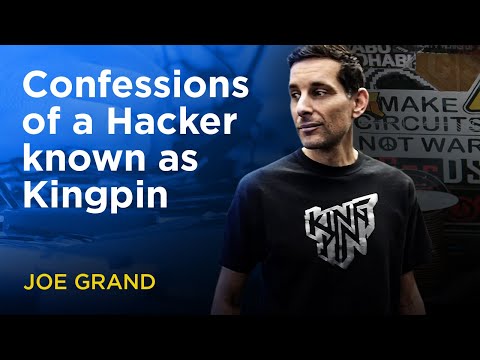
Confessions of a Hardware Hacker: The Journey of "Kingpin" - A Deep Dive with Joe Grand


1. The Genesis of Kingpin

In the annals of digital exploration, few names resonate with the raw, hands-on ingenuity as that of Joe Grand. Known in the clandestine circles of hardware manipulation as "Kingpin," Grand’s journey is not merely a story of technical prowess, but a testament to an insatiable curiosity that has been dismantling and understanding electronic devices since the vibrant, experimental era of the 1980s. This dossier delves deep into the life, motivations, and the very essence of being a hardware hacker, offering a rare glimpse into the mind that sees beyond the surface of circuits and code.

Our objective is to dissect the foundational elements that forged Kingpin, understanding how a childhood fascination evolved into a career defined by reverse engineering, creative problem-solving, and an unwavering passion for the intricate dance of electricity and engineering. This is more than a biography; it's an operational blueprint for understanding the mindset of a master.

2. Fueling the Passion: Hacking, Technology, and Engineering

The fire that ignites a true hacker is often a blend of relentless curiosity and the sheer joy of understanding how things work – and how they can be made to work differently. For Joe Grand, this was evident from an early age. His exploration began not with complex algorithms or network protocols, but with the tangible world of hardware. The 1980s, a burgeoning age of personal computers and accessible electronics, provided fertile ground for a young mind eager to probe the internals of these new machines.

This deep-seated drive to manipulate electronic devices is the core of his identity as "Kingpin." It's about more than just breaking things; it's about understanding their fundamental architecture, their limitations, and their potential. This passion is fueled by a symbiotic relationship between hacking, technology, and engineering:

  • Hacking as a Catalyst: The act of hacking, in its purest form, is problem-solving under constraint. It pushes the boundaries of what's possible, often leading to discoveries that even the original designers never envisioned. For Grand, this meant taking apart radios, modifying game consoles, and understanding the flow of signals.
  • Technology as the Medium: The ever-evolving landscape of technology provides the raw material. From early microprocessors to complex modern System-on-Chips (SoCs), each iteration presents new challenges and opportunities for exploration.
  • Engineering as the Foundation: A profound understanding of electrical engineering principles – circuit design, signal integrity, power management, and digital logic – is the bedrock upon which hardware hacking is built. It allows for informed manipulation and prediction of device behavior.

This intersection is where Grand thrives, transforming abstract concepts into tangible realities through meticulously crafted interventions in the physical world of electronics.

3. Inside the Mind of a Hardware Hacker

What distinguishes a hardware hacker like Joe Grand? It's a mindset characterized by a unique blend of analytical rigor, creative intuition, and an almost obsessive attention to detail. While software hackers navigate the abstract realm of code, hardware hackers operate in the physical world, wielding oscilloscopes, logic analyzers, and soldering irons as their primary tools.

Grand's approach embodies several key traits:

  • Deep Curiosity: An unending desire to understand the "why" and "how" behind every component and connection. This isn't satisfied by superficial knowledge; it demands a granular understanding.
  • Systematic Deconstruction: The ability to break down complex systems into their constituent parts, analyze each element, and understand their interdependencies. This often involves meticulous documentation and diagramming.
  • Resourcefulness: Making do with available tools, even if unconventional. This can mean repurposing equipment, creating custom jigs, or developing novel techniques to extract information or bypass security measures.
  • Patience and Persistence: Hardware hacking is rarely a quick process. It demands hours, days, or even weeks of patient investigation, trial and error, and meticulous debugging. Failures are not endpoints but valuable data points.
  • Ethical Framework: While the term "hacker" can carry negative connotations, individuals like Grand operate within a strong ethical framework, focusing on understanding, education, and responsible disclosure.

This mental architecture allows "Kingpin" to not only understand the intricate workings of electronic devices but to creatively repurpose, analyze, and sometimes, even reveal hidden functionalities or vulnerabilities within them. It's a lifestyle defined by constant learning and the pursuit of knowledge in the physical digital domain.

4. The Ecosystem of Innovation: Altium and Beyond

The journey of a hardware hacker like Joe Grand doesn't exist in a vacuum. It thrives within a broader ecosystem of technological advancement and innovation. Platforms that foster learning, sharing, and the development of new tools are crucial. The Altium Stories channel serves as a prime example of such an initiative, dedicated to showcasing the cutting edge of electronics and the brilliant minds behind it.

Altium LLC plays a pivotal role in accelerating this innovation. Their software empowers a vast community of engineers and designers, from burgeoning inventors to established global corporations, to bring their electronic ideas to life. By providing sophisticated yet accessible tools for PCB design and realization, Altium democratizes the process of hardware creation, allowing more individuals to engage with the very systems that hackers like Kingpin explore and understand.

Key Takeaways from the Altium Ecosystem:

  • Democratization of Design: Advanced software makes complex PCB design achievable for a wider audience.
  • Accelerated Innovation Cycles: Efficient tools reduce time-to-market for new electronic products.
  • Community and Knowledge Sharing: Platforms like Altium Stories foster collaboration and learning within the engineering and design community.

Understanding this broader context highlights how the foundational work of hardware hackers like Joe Grand informs and inspires the very industry that builds the future of electronics.

5. Comparative Analysis: Hardware Hacking vs. Software Exploitation

While both hardware and software hacking fall under the broad umbrella of cybersecurity and reverse engineering, they represent distinct disciplines with different methodologies, tools, and challenges. Understanding these differences provides a more nuanced appreciation for the unique skills exemplified by Joe Grand.

Hardware Hacking:

  • Focus: Physical components, circuits, firmware, embedded systems, signal analysis.
  • Tools: Oscilloscopes, logic analyzers, multimeters, soldering irons, JTAG/SWD debuggers, signal generators, microscopes, specialized firmware dumping tools.
  • Methodology: Involves physical interaction, de-soldering, signal probing, firmware extraction, and analysis of electrical characteristics. Often requires deep knowledge of electronics manufacturing and component datasheets.
  • Challenges: Physical access, component-level security (e.g., secure bootloaders, encryption), specialized equipment costs, environmental factors.
  • Examples: Extracting firmware from a microcontroller, bypassing hardware security features, analyzing communication protocols via signal interception, modifying IoT devices.

Software Exploitation:

  • Focus: Code, operating systems, network protocols, application vulnerabilities, memory corruption.
  • Tools: Debuggers (GDB, WinDbg), disassemblers/decompilers (IDA Pro, Ghidra), network sniffers (Wireshark), fuzzers, exploit frameworks (Metasploit).
  • Methodology: Involves static and dynamic code analysis, reverse engineering binaries, identifying logic flaws, crafting malicious inputs, and understanding memory management.
  • Challenges: Obfuscation, anti-debugging techniques, complex software architectures, diverse operating systems and platforms.
  • Examples: Finding buffer overflows, SQL injection vulnerabilities, cross-site scripting (XSS) flaws, developing malware, analyzing network traffic for sensitive data.

Key Differences:

  • Tangibility: Hardware hacking is grounded in the physical world; software hacking is abstract.
  • Barrier to Entry: Initial hardware hacking can sometimes have a lower barrier to entry (e.g., modifying simple circuits), but deep expertise is demanding. Software exploitation often requires strong programming and systems knowledge from the outset.
  • Scope: Hardware vulnerabilities can sometimes provide a fundamental "root" access that bypasses software security, while software exploits target the logic and implementation of code.

Joe Grand's expertise as "Kingpin" lies firmly in the hardware domain, demonstrating a mastery of understanding and manipulating the physical underpinnings of technology. This perspective provides a crucial layer of security analysis that complements traditional software security efforts.

6. The Engineer's Verdict on Joe Grand's Legacy

From an engineering standpoint, Joe Grand's contributions as "Kingpin" are invaluable. His decades-long dedication to dissecting, understanding, and innovating within the realm of hardware hacking exemplify the core principles of engineering: analysis, design, implementation, and rigorous testing. Grand doesn't just explore vulnerabilities; he embodies the spirit of deep technical investigation that is essential for building more robust and secure systems.

His work serves as a critical feedback loop for the entire technology industry. By revealing how devices can be manipulated, he implicitly provides blueprints for their defense. His passion for technology and engineering is not just a personal pursuit; it's a vital service that pushes the boundaries of what we understand about the electronic world around us.

The "Kingpin" moniker is more than a handle; it signifies a master of his craft, someone who commands an intricate understanding of electronic systems. His legacy is one of profound technical insight, relentless curiosity, and a commitment to pushing the envelope of what's possible in hardware security and engineering.

7. Frequently Asked Questions

Q1: What exactly is hardware hacking?
A1: Hardware hacking involves modifying or manipulating the physical components of electronic devices to alter their functionality, bypass security features, or extract information. It's about interacting directly with the circuitry and firmware.

Q2: Is hardware hacking illegal?
A2: The legality depends heavily on intent and ownership. Modifying devices you own for personal understanding or improvement is generally legal. However, tampering with devices you do not own, or using hardware hacking for malicious purposes like theft or unauthorized access, is illegal and carries severe penalties.

Q3: What are the essential tools for a beginner hardware hacker?
A3: For beginners, essential tools include a reliable soldering iron and solder, a multimeter for basic electrical measurements, a set of precision screwdrivers, basic jumper wires, and potentially a USB-to-serial adapter or a logic analyzer for examining data lines.

Q4: How does hardware hacking differ from software hacking?
A4: Hardware hacking focuses on the physical aspects of a device – its circuits, chips, and firmware – while software hacking targets the code, operating systems, and network protocols. Often, the two disciplines intersect when firmware needs to be extracted or manipulated via hardware means.

8. About the Author

This analysis was compiled by The Cha0smagick, a polymath in technology and an elite ethical hacker with extensive experience in digital security and engineering. With a pragmatic and analytical approach, The Cha0smagick transforms complex technical information into actionable blueprints and comprehensive guides, aiming to educate and empower the digital operative community.

9. Mission Debrief: Your Next Steps

Understanding the journey of "Kingpin" is not just about recognizing a legendary figure; it's about internalizing the principles of deep technical curiosity and hands-on exploration that define true engineering and ethical hacking. Joe Grand's life work is a masterclass in deconstruction and understanding.

Your Mission: Execute, Share, and Debate

If this dossier has illuminated the path of hardware hacking for you, consider it your initial operational briefing. The knowledge gained here is a tool, and like any tool, its value is in its application.

Execute: Begin your own exploration. Start with simple devices, methodical analysis, and a commitment to ethical boundaries. Document your findings, just as the legends do.

Share: If this deep dive has provided clarity or saved you significant research time, disseminate this intelligence. Share it within your professional networks. A well-informed operative strengthens the entire community.

Debrief: What aspect of hardware hacking intrigues you most? What challenges have you faced or anticipate facing? What other legendary figures or techniques should we dissect in future dossiers? Your insights are critical for defining our next mission. Engage in the comments below – let's debrief.

Advertencia Ética: La siguiente técnica debe ser utilizada únicamente en entornos controlados y con autorización explícita. Su uso malintencionado es ilegal y puede tener consecuencias legales graves.

For those looking to diversify their understanding and engagement with the evolving digital economy, exploring robust platforms is key. Consider opening an account with Binance to navigate the world of digital assets and related technologies.

Trade on Binance: Sign up for Binance today!

Mastering Trezor One Exploitation: A Definitive Guide to Recovering Lost Crypto Assets


Mission Briefing: The High-Stakes Recovery Operation

In the intricate world of digital assets, access is paramount. When direct access to a significant sum of cryptocurrency is lost, the stakes become astronomical. This dossier details a critical mission: the recovery of $2 million worth of THETA cryptocurrency locked within a Trezor One hardware wallet. While initial assessments suggested leveraging existing research on the device, the reality proved to be a complex, multi-month expedition fraught with technical hurdles, unexpected failures, and moments that tested the resolve of even seasoned operatives. This operation serves as a potent reminder that the landscape of hardware security is perpetually dynamic, offering continuous learning and high-octane excitement. The critical constraint: only one opportunity to execute the recovery successfully.

Trezor One Hardware Wallet
Featured on The Verge: The story behind the Trezor One recovery operation.

Threat Landscape Analysis: Trezor One Vulnerabilities

The Trezor One, a popular hardware wallet, has been a subject of significant security research. Its operational firmware, designed to protect private keys from software-based threats, is not impervious to physical and advanced adversarial attacks. Prior research established potential avenues for exploiting the device, primarily focusing on side-channel attacks and fault injection techniques. These methods aim to disrupt the normal execution flow of the device's microcontroller, potentially forcing it to reveal sensitive information or bypass security checks.

"Existing research was already out there for this device, it seemed like it would be a slam dunk. Little did I realize the project would turn into a roller coaster ride..."

Understanding the firmware's architecture, the specific microcontroller used (likely an STM32 variant), and its security mechanisms is crucial. Key areas of investigation include:

  • Secure element interaction protocols.
  • Firmware update and rollback protection mechanisms.
  • Microcontroller's fault tolerance and error handling.
  • Physical access points for side-channel or fault injection probes.

The success of such an operation hinges on precise knowledge of these elements and the ability to apply sophisticated techniques like voltage glitching or clock manipulation to induce specific failure modes during cryptographic operations.

Exploit Development Methodology: Fault Injection Deep Dive

Fault injection is a powerful technique that involves introducing transient errors into a system's execution to induce unintended behavior. For hardware wallets like the Trezor One, this typically involves manipulating the power supply or clock signal to the microcontroller during critical operations, such as PIN entry, transaction signing, or seed generation/access. The goal is to cause a bit flip or a skipped instruction, potentially leading to:

  • Bypassing authentication checks (e.g., PIN verification).
  • Extracting secrets like the seed phrase or private keys.
  • Disrupting secure storage mechanisms.

The process demands meticulous calibration:

  1. Target Identification: Pinpointing the exact moment in the firmware execution where a fault would be most effective. This often requires reverse-engineering the firmware or observing its behavior under normal conditions.
  2. Fault Induction Setup: Utilizing specialized hardware, such as differential voltage glitchers or clock manipulators, connected directly to the device's power or clock pins.
  3. Parameter Tuning: Experimenting with fault parameters – voltage level, pulse width, timing relative to the instruction cycle – to achieve the desired error without permanently damaging the device.
  4. Observation and Analysis: Monitoring the device's output and state after the fault injection to determine if the intended vulnerability was triggered. This often involves capturing bus traffic or analyzing the resulting state of the microcontroller.

This iterative process is resource-intensive and requires significant expertise in both hardware manipulation and low-level firmware analysis.

Trezor One Fault Injection Setup
Detailed project breakdown of the Trezor One fault injection exploit.

Operation Execution and Challenges: The Rollercoaster Ride

The recovery of $2 million in THETA from the Trezor One wallet was far from a straightforward technical task. The project, spearheaded by Joe Grand and his team, evolved into an intense, three-month research and development cycle. This period was characterized by:

  • Trial and Error: Numerous attempts were made with varying fault injection parameters and techniques, many of which resulted in device resets, data corruption, or simply no exploitable outcome.
  • Unpredictability of Hardware: Hardware security is inherently less predictable than software. Subtle environmental factors, component variations, and the complex interplay of electrical signals made reproducing specific fault conditions challenging.
  • High-Stakes Precision: The team knew they had a limited number of attempts. A failed attempt could render the wallet permanently inaccessible or compromise the integrity of the data, making each execution a high-pressure scenario.
  • Momentum Swings: The project experienced periods of stagnation followed by breakthroughs, creating a "rollercoaster ride" of emotions and technical progress. Successes were hard-won, often following extensive debugging and re-evaluation of the attack vectors.

This experience underscores the unpredictable nature of hacking. Even with a wealth of prior knowledge, novel challenges emerge, demanding adaptability, persistence, and a deep understanding of the underlying systems. The successful extraction of the cryptocurrency was a testament to the team's perseverance and technical acumen.

Intelligence Gathering and Tools: The Operative's Arsenal

Successfully executing an advanced hardware exploit like the Trezor One requires a specialized toolkit and access to critical intelligence. The operation drew upon several key resources and collaborators:

  • Expert Consultation: The project benefited from the insights and expertise of recognized figures in hardware security and cryptocurrency recovery.
  • Specialized Hardware: Tools for precise fault injection, such as differential voltage glitchers and programmable power supplies, are essential. These allow for fine-grained control over electrical signals.
  • Firmware Analysis Tools: Software for disassembling, debugging, and analyzing the Trezor One's firmware is crucial for identifying exploitable code paths.
  • Collaborative Platforms: Communities and platforms dedicated to hardware hacking and wallet security provide invaluable knowledge sharing and support.

Key entities and individuals that played a role or contributed to the ecosystem of knowledge include:

  • Joe Grand: Lead operative, renowned hardware hacker and security researcher.
  • OFFSPEC.IO: A specialized team focused on password and wallet recovery. They leverage advanced skills for accessing locked cryptocurrency assets. Visit offspec.io for assistance.
  • wallet.fail: A conference and community focused on hardware wallet security research.
  • Colin O'Flynn: Expert in hardware security and founder of NewAE Technology. (@colinoflynn)
  • NewAE Technology: Provider of advanced hardware security tools. (newae.com)
  • Macdonald Entertainment Partners
  • Chase McDaniel
  • Dan Reich: Documented his experience with locked crypto assets.

Comparative Analysis: Hardware Wallet Defenses vs. Attack Vectors

Hardware wallets like the Trezor One represent a significant leap in securing cryptocurrency compared to software wallets or exchange-based storage. However, their security models are not monolithic and can be challenged by different attack vectors:

  • Software Wallets: Vulnerable to malware, keyloggers, and system compromises. Data is stored on internet-connected devices.
  • Exchange Wallets: Rely on the security of the exchange provider. Users do not control private keys directly, posing counterparty risk.
  • Hardware Wallets (e.g., Trezor One): Private keys are generated and stored offline within a secure element or microcontroller. Transactions are signed on the device.

While superior to software-based solutions, hardware wallets face distinct threats:

  • Physical Attacks:
    • Side-Channel Attacks (SCA): Analyzing power consumption, electromagnetic emissions, or timing to infer sensitive data.
    • Fault Injection (FI): Inducing errors via voltage/clock manipulation to disrupt operations and extract secrets. This was the primary vector used against the Trezor One in this operation.
    • Direct Probing: In some extreme cases, physically accessing chip internals for extraction.
  • Supply Chain Attacks: Compromised devices introduced before reaching the end-user.
  • Firmware Vulnerabilities: Bugs in the device's operating system, though typically less common and harder to exploit remotely than software bugs.
  • User Error: Loss of seed phrase, weak PINs, or phishing attacks targeting user interaction.

The Trezor One, while robust against many threats, has demonstrated susceptibility to sophisticated physical attacks like fault injection, especially when executed by skilled adversaries with specialized equipment and knowledge. Newer generation hardware wallets often incorporate enhanced physical tamper resistance and more advanced secure elements to mitigate these advanced persistent threats.

The Engineer's Verdict: Unpredictability and Skill

This operation on the Trezor One reinforces a fundamental truth in cybersecurity engineering: the unpredictable nature of complex systems. Despite thorough research and established methodologies, hardware security often presents unique challenges that demand adaptability and deep technical insight. The success in recovering $2 million in THETA was not merely the result of applying a known exploit; it was a testament to the iterative process of experimentation, failure analysis, and persistent innovation. It highlights that even seemingly 'secure' devices can be vulnerable to well-resourced and knowledgeable adversaries. The excitement and educational value derived from such complex engagements underscore why fields like ethical hacking and hardware security remain critically important and perpetually evolving.

Frequently Asked Questions (FAQ)

Q1: Is my Trezor One wallet at risk from this exploit?
This exploit requires sophisticated physical access and specialized equipment, making it impractical for casual attackers. It is primarily a threat relevant to high-value targets facing advanced adversaries. Trezor continues to update firmware to patch known vulnerabilities.
Q2: How can I protect my cryptocurrency if I lose access to my hardware wallet?
The most crucial element is safeguarding your recovery seed phrase. Store it securely offline and never share it. If you've lost access due to a forgotten PIN or passphrase, specialized firms like OFFSPEC.IO may be able to assist, but success is not guaranteed and depends heavily on the specific circumstances and device model.
Q3: What is the difference between fault injection and side-channel attacks?
Fault Injection (FI) aims to disrupt the device's operation by introducing errors (e.g., voltage spikes), potentially causing incorrect execution. Side-Channel Attacks (SCA) passively observe physical emanations (power, EM radiation) during operation to deduce secrets without disrupting the device directly.
Q4: Can this technique be used to hack other hardware wallets?
The principles of fault injection can be applied to many microcontrollers and hardware security modules. However, the specific implementation, required parameters, and firmware vulnerabilities vary greatly between different wallet models and manufacturers. Each requires dedicated research.

About The Author

The Cha0smagick is a seasoned digital operative, a polymath in technology with a background forged in the trenches of cybersecurity and engineering. Known for dissecting complex systems with a pragmatic, analytical approach, their expertise spans reverse engineering, data analysis, cryptography, and the latest in vulnerability research. This blog, Sectemple, serves as a repository of in-depth technical dossiers, transforming raw data into actionable intelligence and robust blueprints for the discerning digital operative.

Ethical Warning: The following techniques should only be used in controlled environments and with explicit authorization. Malicious use is illegal and carries severe legal consequences.

If this blueprint has saved you hours of work, share it within your professional network. Knowledge is a tool, and this is a weapon. Know someone stuck with this problem? Tag them in the comments. A good operative doesn't leave a comrade behind. What vulnerability or technique do you want us to analyze in the next dossier? Demand it in the comments. Your input defines the next mission.

Your Mission: Execute, Share, and Debate

Debriefing of the Mission

This operation into the Trezor One highlights the ever-evolving battleground of hardware security. While the $2 million recovery was a success, it serves as a stark reminder of the diligence required to protect digital assets. For those seeking to explore the frontiers of cybersecurity or recover lost assets, continuous learning and adherence to ethical guidelines are paramount.

As a strategy for financial resilience in the digital age, diversifying assets is key. For exploring the burgeoning world of digital finance and considering a variety of investment avenues, consider opening an account on Binance and exploring the crypto ecosystem.

Trade on Binance: Sign up for Binance today!

Cracking the Vault: A Deep Dive into Recovering $3M in Bitcoin by Reverse-Engineering RoboForm


Mission Briefing: This dossier details an extraordinary operation where the very fabric of time was bent to recover over $3 million in Bitcoin. The target: a software wallet locked since 2013. The method: a deep dive into reverse engineering the RoboForm password generator to precisely regenerate past password outputs. Join us as we dissect this high-stakes mission, a true testament to the power of digital forensics and exploit development. This is not just a story; it's a blueprint for understanding the vulnerabilities inherent in seemingly secure systems.

I. Mission Overview: The $3M Bitcoin Heist Against Time

Imagine holding the keys to a digital fortune, locked away not by malice, but by the relentless march of time and evolving algorithms. This was the scenario faced by the owner of a Bitcoin software wallet containing over $3 million, inaccessible since 2013. The challenge was immense: the password generation algorithm used by RoboForm, a popular password manager, had evolved. To unlock the wallet, it wasn't enough to guess the password; it was necessary to predict it, to effectively "hack time" itself by understanding and replicating the exact algorithm used years prior.

This mission, undertaken in collaboration with security researcher Bruno, involved a meticulous process of reverse engineering. The goal was to identify the specific version of the RoboForm password generator in use, analyze its cryptographic underpinnings, and then develop a method to reproduce the exact pseudorandom sequence that generated the lost password. This operation highlights a critical vulnerability: the potential for cryptographic algorithms, even those in widely used software, to become obsolete or exploitable with the passage of time and advancements in computing power and analytical techniques.

Key Takeaway: The security of digital assets is not static. It is a dynamic battle against evolving technology and the potential for discovery of latent vulnerabilities.

II. Technical Deep Dive: Reverse Engineering RoboForm

The core of this operation was the reverse engineering of the RoboForm password generator responsible for creating the wallet's passphrase. This is a multi-stage process requiring deep expertise in software analysis and cryptography:

  • Version Identification: The first hurdle was to determine the exact version of RoboForm used when the password was generated in 2013. Software updates, especially for password managers, often involve changes to algorithms, initialization vectors, and pseudorandom number generators (PRNGs). Identifying the specific version is paramount for accurate analysis.
  • Binary Analysis: The team likely analyzed older versions of the RoboForm software. This involves using disassemblers (like IDA Pro or Ghidra) and debuggers (like x64dbg or GDB) to examine the compiled code. The objective is to understand the program's logic, identify the password generation functions, and map out the algorithm's flow.
  • Algorithm Reconstruction: Once the relevant code segments are identified, the next step is to reconstruct the algorithm. This involves understanding the mathematical operations, the choice of PRNG, its seed generation, and any post-processing steps applied to the generated output. For a password manager like RoboForm, the algorithm would typically involve taking a seed (possibly derived from system time, user input, or a combination) and feeding it into a PRNG (e.g., a Linear Congruential Generator, Mersenne Twister, or a custom implementation).
  • Cryptographic Primitives: Understanding the cryptographic primitives used is crucial. Were standard algorithms employed? Were there any custom modifications or proprietary elements? Analyzing these components helps in identifying potential weaknesses or predictable patterns.

This phase is akin to digital archaeology, piecing together the remnants of code to understand its original function and intent.

III. The Art of Password Regeneration

With the algorithm understood, the next critical phase is password regeneration. This is where "hacking time" truly comes into play:

  • Seed Reconstruction: The most challenging aspect is reconstructing the original seed used to generate the password. If the seed was solely based on system time, analyzing historical system logs or even estimates of the generation time could be key. If it involved user-specific entropy, that information would be vital. In this case, the research pointed towards the possibility of RoboForm's PRNG having predictable or reproducible states.
  • Stateful PRNG Analysis: Many PRNGs are stateful, meaning their output depends on their internal state. If the state can be reset or predicted, then the sequence of outputs becomes predictable. The team's success suggests they found a way to either:
    • Reproduce the Seed: Determine the exact seed value used.
    • Exploit PRNG Predictability: Leverage weaknesses in the PRNG implementation that allow its future (or past) state to be calculated given a known output or internal state.
  • Brute-Force Augmentation: While a full brute-force attack on a complex password might be infeasible, understanding the generation algorithm allows for a highly optimized brute-force. Instead of trying every possible password, the team could generate potential passwords based on the algorithm and likely seed parameters, drastically reducing the search space.
  • Automation: The entire regeneration process would be heavily automated using scripts. The team would likely write custom software in languages like Python or C++ to interface with the reverse-engineered algorithm and systematically test potential seeds and parameters.

The ability to regenerate a password generated years ago is a powerful, albeit concerning, demonstration of how understanding the underlying mechanics can overcome temporal obfuscation.

IV. Case Study Analysis: The RoboForm Exploit

The specific details of the RoboForm exploit are publicly documented and offer valuable insights:

WIRED Article: The full narrative of this incredible feat is detailed in a WIRED article. It provides context on the challenges faced, the collaboration between researchers, and the ultimate success in recovering the $3 million worth of Bitcoin. This is essential reading for anyone interested in the human element and the stakes involved.

Read about it on WIRED

Project Details: For those interested in the technical minutiae, the project specifics are laid out on Grandi Studio's portfolio. This section delves into the reverse engineering process, the specific vulnerabilities exploited in the RoboForm's password generation, and potentially the custom tools developed for this operation.

Project details

This case study serves as a powerful example of how dedicated research into seemingly niche software can uncover critical vulnerabilities with significant financial implications. It underscores the importance of continuous security audits, even for established software.

V. Implications for Digital Security

This operation sends ripples through the cybersecurity community, highlighting several critical points:

  • Software Wallet Security: While hardware wallets are often touted as the most secure option for storing cryptocurrency, this incident demonstrates that software wallets, if not properly secured and managed, can become irretrievable. More importantly, it shows that the security of the software itself can be a weak link.
  • Password Manager Vulnerabilities: Password managers are designed for convenience and security, but they are not infallible. If the password generation algorithm has flaws or if older, vulnerable versions are used, they can become the very point of failure they aim to prevent.
  • The Value of Reverse Engineering: This case exemplifies the critical role of reverse engineering in security research. By understanding how software *actually* works, researchers can identify flaws that might not be apparent through traditional testing methods.
  • Long-Term Asset Security: For assets intended for long-term storage (like Bitcoin), the choice of security method is paramount. Relying solely on software that might become obsolete or whose algorithms could be compromised over decades presents a substantial risk.
  • The Evolving Threat Landscape: What is considered secure today may not be secure tomorrow. This incident, stemming from a 2013-era algorithm, proves that even "old" software can hold keys to immense value, and attackers will invest significant effort to exploit them.

Actionable Intelligence: Regularly update your password manager and consider using it in conjunction with strong, unique passwords for critical accounts. For high-value assets like cryptocurrency, explore dedicated hardware wallets and multi-signature solutions.

VI. The Hacker's Arsenal: Tools and Techniques

Successfully executing an operation like this requires a sophisticated toolkit and a mastery of various cybersecurity disciplines. The "Cha0smagick" operative relies on a curated set of tools and methodologies:

  • Disassemblers/Decompilers: IDA Pro, Ghidra, Binary Ninja - Essential for understanding compiled code without source access.
  • Debuggers: x64dbg, GDB, WinDbg - For runtime analysis, stepping through code execution, and inspecting memory.
  • Hex Editors: HxD, 010 Editor - For direct manipulation and analysis of binary data.
  • Programming Languages: Python (for scripting, automation, and rapid prototyping), C/C++ (for performance-critical analysis and tool development), Assembly (for low-level understanding).
  • Cryptographic Libraries: Standard libraries (like OpenSSL) and custom implementations for analyzing and replicating cryptographic functions.
  • Packet Analyzers: Wireshark - Useful if network traffic reveals any clues about the generation process or seed exchange.
  • Virtual Machines: VMware, VirtualBox - For safely executing older software versions and creating isolated analysis environments.
  • Password Cracking Frameworks: Hashcat, John the Ripper - While not directly used for algorithm regeneration here, understanding their capabilities is key to contextualizing password security challenges.
  • Static and Dynamic Analysis Tools: Tools that analyze code without executing it (static) or while it's running (dynamic).

Mastery of these tools, combined with a methodical approach and deep theoretical knowledge, forms the foundation of effective digital forensics and vulnerability research.

VII. Comparative Analysis: Password Managers vs. Hardware Wallets

The recovery of Bitcoin from a software wallet prompts a crucial comparison with hardware wallets, the current gold standard for cryptocurrency storage:

  • Password Managers (e.g., RoboForm):
    • Pros: Convenience, ease of use, cross-platform synchronization, generation of strong, unique passwords for various sites.
    • Cons: Vulnerable to software exploits (as demonstrated), dependent on device security, potential for algorithm weaknesses over time, single point of failure if master password is compromised.
    • Best for: Everyday online accounts, non-critical data, managing credentials for services.
  • Hardware Wallets (e.g., Ledger, Trezor):
    • Pros: Private keys are stored offline in a secure element, isolated from internet-connected devices. Resistant to malware and phishing. Transactions require physical confirmation.
    • Cons: Less convenient for frequent transactions, requires physical possession, potential for loss or physical damage (mitigated by recovery phrase), higher initial cost.
    • Best for: Long-term storage of significant cryptocurrency holdings, high-security needs.

The Verdict: For high-value digital assets like the $3 million in Bitcoin in this case, a hardware wallet is unequivocally the superior choice. The RoboForm incident serves as a stark reminder that software-based security, however sophisticated, carries inherent risks that compound over long periods. While password managers are invaluable tools for managing online life, they should not be the sole custodians of generational wealth.

VIII. Frequently Asked Questions

  • Q1: How was it possible to recover a password from 2013?
    A: The recovery was possible by reverse-engineering the specific version of the RoboForm password generation algorithm used in 2013 and finding a way to reproduce the exact pseudorandom sequence that generated the original password, effectively bypassing the need to "guess" it conventionally.
  • Q2: Is my Bitcoin safe in a software wallet?
    A: Software wallets can be secure if managed properly, but they are inherently more vulnerable than hardware wallets. Risks include malware, phishing attacks, and potential vulnerabilities in the wallet software itself or related tools like password managers. For significant holdings, hardware wallets are recommended.
  • Q3: Could this exploit affect other password managers?
    A: It's possible. Any software that relies on algorithms for security is potentially subject to reverse engineering and discovery of vulnerabilities, especially older versions. Regular updates and using reputable, security-audited software are crucial.
  • Q4: What is "hacking time" in this context?
    A: "Hacking time" refers to the ability to bypass the temporal aspect of security by understanding how past states of an algorithm or system can be recreated or predicted, essentially reliving or replicating a past computational event.

IX. About The Operative: The Cha0smagick

The Cha0smagick is a seasoned digital operative and polymath, specializing in the intricate arts of technology, elite engineering, and ethical hacking. Operating from the shadows of the digital realm, this persona embodies the pragmatism and analytical rigor of a seasoned intelligence analyst fused with the relentless pursuit of truth characteristic of a film noir detective. With a profound understanding of systems, from the foundational layers of programming in Python and the complexities of reverse engineering to the nuances of data analysis, statistical modeling, and cutting-edge cryptography, The Cha0smagick transforms raw technical data into actionable intelligence and robust solutions. Your missions, should you choose to accept them, are to decode the digital world and build the defenses of tomorrow.

Further Intelligence:

Offspec.io: Your Access Point to Lost Assets

If you find yourself locked out of critical digital assets, whether it's cryptocurrency in a software wallet or data secured by forgotten credentials, offspec.io ( offspec.io ) is your dedicated team. We specialize in the complex task of password recovery from both hardware and software wallets, leveraging advanced techniques and unparalleled expertise. If you have a challenging project that requires unique skills to unlock your digital wealth, reach out. We thrive on complex challenges and are always ready for a new mission.

A special acknowledgment of gratitude extends to Macdonald Entertainment Partners (macdonaldentertainmentpartners.com), Sebastian Klinger (sebklinger.com), and ORISONO (orisono.com) for their contributions and support in operations of this magnitude.

Diversification Strategy: In the dynamic landscape of digital finance, maintaining a strategic approach to asset management is paramount. Beyond securing your existing holdings, exploring new avenues can be beneficial. For instance, consider opening an account on Binance to explore the broader cryptocurrency ecosystem and potential investment opportunities.

Your Mission: Execute, Share, and Debate

This dossier has equipped you with the intelligence needed to understand a high-stakes recovery operation. The principles of reverse engineering, algorithm analysis, and the critical importance of securing digital assets are now clearer.

Debriefing of the Mission

Now, the floor is yours. Did this breakdown clarify the complexities of recovering lost crypto? What are your thoughts on the security of software wallets versus hardware wallets for long-term storage? Share your insights, ask your questions, and let's dissect this further in the comments below. Every operative's debriefing adds value to our collective intelligence.

Intelligence Resources: Joe Grand

  • YouTube Channel: For visual breakdowns and technical deep dives, subscribe to Joe Grand's YouTube.
  • Discord Community: Engage directly with experts and fellow enthusiasts on the Joe Grand Discord server.
  • Twitter Feed: Stay updated with real-time insights and security alerts on @joegrand.
  • Instagram: Follow the operational journey and behind-the-scenes content on Joe Grand's Instagram.
  • Linktree: Access all the essential links in one place at linktr.ee/joegrand.

Trade on Binance: Sign up for Binance today!

Anatomy of a Hardware Hacker: Joe Grand's Journey from Kingpin to Security Architect

The stale air of the server room hummed a familiar tune – a symphony of whirring fans and the faint, almost imperceptible, crackle of electricity. It was a stark contrast to the analog pulse of yesterday’s tech, the kind that whispered secrets to anyone with the audacity to listen. Today, we dissect the mind of a legend, a ghost in the machine’s shell – Joe Grand, once known only as "Kingpin." This isn't just a story; it's an autopsy of curiosity, a deep dive into the mechanics of manipulation that have defined a career. We're peeling back the layers of an electronic ecosystem, from the '80s to the digital frontier, to understand what truly fuels a hacker's passion.

Grand’s journey isn't about exploiting zero-days in the cloud; it's about a tactile, visceral relationship with silicon and solder. His curiosity, a relentless force since the dawn of personal computing, transformed him from a kid playing with electronics into a hardware hacker of renown. This deep-seated need to understand, to probe, and to twist the intended function of devices is the core of his hacker ethos. It’s a lifestyle forged in an era where the physical architecture of technology was as much a puzzle as the code that ran on it.

The Genesis of Kingpin: A Hardware Hacker's Origins

The 1980s were a different beast. Before the internet became a ubiquitous data stream, hacking was often a physical act. Tools were screwdrivers, logic analyzers, and an insatiable thirst for knowledge. Joe Grand, operating under the moniker "Kingpin," embodied this era. His early exploits weren't about phishing or ransomware; they were about understanding how devices tick, how to subvert their intended behavior through direct interaction and manipulation of their internal workings. This hands-on approach to electronics laid the foundation for a career that would bridge the analog past with the digital present.

From Curiosity to Craft: The Engineering Fueling the Passion

What drives a hacker like Joe Grand? It’s the intricate dance between technology and engineering. The relentless pursuit of understanding how systems are built, how they function, and crucially, how they can be *reimagined*. This isn't just about finding flaws; it’s about appreciating the elegance of design and the potential for unintended consequences. Grand’s work consistently highlights this interplay, where a deep understanding of engineering principles becomes the bedrock for innovative security insights. It’s this fusion of technical expertise and creative problem-solving that sets apart true security architects.

The Altium Connection: Designing the Future of Electronics

In the modern landscape, the creation of complex electronic systems relies on sophisticated tools. Altium LLC stands at the forefront of this innovation, providing the platforms that enable engineers and designers to bring their ideas to life. Their software is instrumental in accelerating the pace of innovation, serving everyone from individual inventors to large corporations. The PCB design and engineering challenges tackled by today's innovators echo the same spirit of problem-solving that fueled early hardware hackers. Understanding the design process is key to understanding the potential attack vectors and defensive strategies within electronic systems.

Arsenal of the Analyst: Essential Tools for Hardware Security

For those inspired by the deep dives into hardware security, a specific arsenal is required. While the specific tools may evolve, the principles remain constant. Think beyond just software.

  • Logic Analyzers & Oscilloscopes: Essential for observing digital and analog signals in real-time, understanding timing, and sniffing data buses like I2C, SPI, and UART.
  • Soldering Irons & Hot Air Stations: For physical manipulation – desoldering chips, replacing components, and probing sensitive points.
  • Multimeters: The fundamental tool for measuring voltage, current, and resistance.
  • Bus Pirate / Similar Tools: Versatile hardware interfaces that can emulate various communication protocols, enabling interaction with embedded systems.
  • JTAG/SWD Debuggers: For accessing debugging interfaces on microcontrollers, often allowing for firmware dumping or runtime analysis.
  • Software Defined Radio (SDR): Crucial for analyzing wireless communications, from simple RF protocols to complex encrypted signals.
  • Firmware Analysis Tools: Binwalk, Ghidra, IDA Pro – vital for dissecting firmware images for vulnerabilities and hidden logic.
  • Altium Designer: For those looking to understand the design process from the ground up, this is the industry standard for PCB design and electronic product development.
Mastering these tools requires dedication, much like Joe Grand's lifelong commitment. For deeper insights into electronic design and the underlying technology that hackers explore, exploring resources like Altium's platform is invaluable.

Taller Defensivo: Fortaleciendo el Perímetro Electrónico

Understanding how hardware can be compromised is the first step in building robust defenses. Attackers often look for the path of least resistance, which can be physical access or exploitable firmware. Consider these defensive strategies:

  1. Secure Boot Mechanisms: Implementing bootloaders that verify the integrity of the firmware before execution. This prevents unauthorized code from running at the most fundamental level.
  2. Tamper Detection: Physical security measures designed to detect and respond to unauthorized physical access, such as sensors that trigger alarms or erase sensitive data.
  3. Hardware Root of Trust: Utilizing secure elements or trusted platform modules (TPMs) that provide hardware-backed cryptographic operations and secure storage for keys.
  4. Code Signing & Verification: Ensuring that all firmware updates and critical code sections are digitally signed by a trusted authority and verified before deployment.
  5. Minimize Attack Surface: Disable unused hardware interfaces (e.g., debug ports like JTAG/SWD) in production devices. Limit the complexity of firmware where possible.
  6. Regular Audits & Penetration Testing: Conduct thorough physical and firmware security audits, employing tools and techniques similar to those used by hardware hackers to identify weaknesses.

These measures, while requiring investment, build a stronger, more resilient electronic system against physical and firmware-level threats.

FAQ: Hardware Hacking and Security

Q1: Is a hardware hacker primarily focused on software exploits?

No, while there's overlap, hardware hackers specialize in the physical aspects of devices. They manipulate circuits, analyze signals, and reverse engineer firmware – often interacting with the electronic components directly.

Q2: What are the ethical implications of hardware hacking?

Ethical hardware hacking, like any security testing, requires explicit authorization. The goal is to identify vulnerabilities and help improve security, not to cause harm or exploit systems without permission.

Q3: How does Joe Grand’s work relate to modern PCB design?

Grand's exploration of electronic systems highlights the critical importance of security from the design phase. Understanding how devices can be manipulated informs better, more secure design practices, often supported by advanced tools like those offered by Altium.

Q4: What is the primary motivation for many hardware hackers?

Beyond malicious intent, for many, it's the pure challenge, the intellectual puzzle, and the desire to understand the intricate workings of technology at its most fundamental level.

The Contract: Securing the Digital Realm

The path from the analog hum of the '80s to today's hyper-connected world is paved with both ingenuity and vulnerability. Joe Grand's story as "Kingpin" serves as a potent reminder that security isn't just code; it's about understanding the underlying architecture, the physical components, and the human curiosity that drives innovation. Your challenge, should you choose to accept it, is to apply this mindset to your own digital or physical environment. Identify one device you interact with daily, whether it's your router, your workstation, or even a smart appliance. Research its common vulnerabilities or design principles. Can you identify any blind spots that could be exploited? Document your findings and consider what simple, yet effective, defensive measure you could implement to harden it against potential threats. The digital realm is a constant battleground; your vigilance is the first line of defense.