{/* Google tag (gtag.js) */} SecTemple: hacking, threat hunting, pentesting y Ciberseguridad
Showing posts with label blockchain forensics. Show all posts

Cracking the Code: The $15 Billion Bitcoin Cyber Heist and How a Bay Area Investigator Uncovered the Suspect's Cambodian Compound


Introduction: The Anatomy of a Digital Ghost

In the shadowy corners of the digital realm, operations of immense scale can materialize and disappear with alarming speed. The recent seizure of a record $15 billion in Bitcoin, orchestrated by the U.S. Department of Justice, serves as a stark reminder of the sophisticated cyber fraud networks operating beyond conventional borders. This isn't just a news headline; it's a complex case study in digital crime, international law enforcement, and the relentless pursuit of justice. For operatives in the digital space, understanding the mechanisms of such heists is paramount for both defense and detection. This dossier will dissect the anatomy of this colossal scam, focusing on the investigative techniques that led to the seizure and the implications for future cybersecurity operations.

The Genesis of the $15 Billion Phantom: A Deep Dive into the Bitcoin Scam

The operation, based out of Cambodia, targeted unsuspecting Americans, siphoning billions through intricate cyber fraud schemes. While the specifics of the fraud are still unfolding, initial reports suggest a multi-pronged attack vector, likely leveraging social engineering, cryptocurrency investment scams, and sophisticated phishing techniques. The sheer magnitude of the seized assets – $15 billion in Bitcoin – underscores the profitability of these illicit digital enterprises and the vulnerability of individuals to these advanced predatory tactics. This operation highlights a critical trend: the increasing sophistication and geographic dispersion of cybercrime, making traditional investigative methods insufficient.

Field Intelligence: A Bay Area Investigator's Infiltration of the Cambodian Compound

Adding a crucial layer of human intelligence to the digital investigation, a Bay Area-based investigator revealed a firsthand account of visiting one of the alleged scammer's overseas compounds in Cambodia earlier this year. This investigator, whose insights have been shared with the ABC7 I-Team, provided visual evidence – videos – offering a rare glimpse into the physical infrastructure supporting these digital illicit operations. Such direct observation is invaluable, bridging the gap between the abstract nature of cryptocurrency transactions and the tangible reality of the criminal enterprises behind them. It confirms that even in the digital age, physical locations play a role in housing the operations and personnel involved in large-scale cybercrime.

Ethical Warning: The following techniques are for educational purposes only and should be used solely for authorized security testing. Unauthorized access or use is illegal and carries severe penalties.

Technical Blueprint: Deconstructing the Cyber Fraud Operation

To comprehend how such a massive operation was executed, we must deconstruct its likely technical components:

  • Infrastructure Setup: The use of Cambodia as a base suggests a strategic decision to leverage a jurisdiction with potentially less stringent regulatory oversight or easier operational concealment. This likely involved secure, private compounds equipped with high-speed internet, numerous workstations, and potentially specialized hardware for managing large-scale cryptocurrency operations.
  • Social Engineering and Phishing Kits: Sophisticated phishing campaigns would have been essential to lure victims. This implies the development or acquisition of advanced phishing kits designed to mimic legitimate investment platforms. These kits would likely include fake websites, convincing email templates, and possibly even chatbot integrations for more interactive scams.
  • Cryptocurrency Wallets and Management: Managing $15 billion in Bitcoin requires robust wallet infrastructure. This could involve a combination of:
    • Hot Wallets: For frequent, smaller transactions and operational liquidity.
    • Cold Wallets (Hardware Wallets/Paper Wallets): For secure storage of the bulk of the illicit funds, minimizing exposure to online threats.
    • Multi-signature Wallets: Requiring multiple private keys to authorize transactions, adding a layer of security against single points of failure or internal compromise.
  • Anonymization Techniques: To obscure their digital footprints, the perpetrators likely employed a range of anonymization tools and techniques:
    • VPNs and Proxies: To mask their origin IP addresses.
    • Tor Network: For anonymized browsing and communication.
    • Encrypted Communication Tools: To prevent eavesdropping on their command-and-control communications.
  • Exploitation of Vulnerabilities: Depending on the specific "cyber fraud" aspect, the operation might have exploited known software vulnerabilities in financial platforms, exchanges, or user devices.

Blockchain Forensics: Tracing the Digital Footprints

The seizure of Bitcoin is a testament to the advancements in blockchain forensics. Tools and techniques employed by entities like Chainalysis, Elliptic, and even specialized units within law enforcement agencies allow for the tracing of cryptocurrency transactions.

  • Transaction Graph Analysis: By analyzing the public ledger, investigators can map the flow of funds from illicit sources to various wallets. This involves identifying patterns, clustering wallets belonging to the same entity, and identifying exchanges or mixers used to launder the funds.
  • Exchange Monitoring: Collaborating with cryptocurrency exchanges is crucial. Exchanges often have Know Your Customer (KYC) protocols that can link wallet addresses to real-world identities when funds are withdrawn or deposited.
  • Identification of Mixers and Tumblers: Scammers often use cryptocurrency mixers (like Blender.io, which was sanctioned by the US Treasury) to obfuscate the trail of funds. Advanced forensic analysis can sometimes de-anonymize transactions even after they have passed through mixers, by identifying non-random patterns or linking inputs to outputs.
  • Publicly Available Information: Investigators leverage open-source intelligence (OSINT), including social media, dark web forums, and news reports, to correlate wallet addresses with known criminal entities or individuals. The investigator's video evidence from Cambodia would fall into this category, providing crucial contextual information.

Defensive Protocols: Fortifying Against Crypto Scams

For individuals and organizations, defending against such sophisticated scams requires vigilance and robust security practices.

MISSION CRITICAL DEFENSES

  • Skepticism is Key: Be wary of unsolicited investment opportunities, especially those promising unusually high returns with little risk. If it sounds too good to be true, it almost certainly is.
  • Verify Platforms: Always confirm the legitimacy of cryptocurrency exchanges and investment platforms. Check for official registration, regulatory compliance, and independent reviews. Avoid platforms that primarily operate through social media or direct messaging.
  • Secure Your Wallets: Use hardware wallets for significant holdings. Employ strong, unique passwords and enable Two-Factor Authentication (2FA) wherever possible. Never share your private keys or seed phrases.
  • Beware of Social Engineering: Be cautious of requests for personal information, remote access to your computer, or urgent financial transfers. Scammers often impersonate trusted entities (banks, government agencies, tech support).
  • Educate Yourself Continuously: Stay informed about the latest scam tactics. Resources like the FBI's Internet Crime Complaint Center (IC3) and cybersecurity blogs provide valuable insights.
  • Report Suspicious Activity: If you encounter a scam or are a victim, report it immediately to relevant authorities (e.g., IC3, local law enforcement).

The Investigator's Arsenal: Tools and Techniques

The investigator's ability to visit the compound and capture footage points to a set of skills that blend traditional detective work with digital investigation:

  • OSINT (Open-Source Intelligence): Identifying potential locations, individuals, and connections through publicly available data.
  • Digital Forensics Tools: While not explicitly stated, the investigator likely works with or has access to tools that can analyze digital evidence, potentially including wallet data or communication logs if obtained legally.
  • Surveillance and Reconnaissance: Traditional methods of observation and documentation, including video recording, are critical for understanding the physical footprint of a cybercrime operation.
  • International Cooperation: Effective investigations of this scale often require collaboration with international law enforcement agencies and governmental bodies.
  • Risk Assessment and Personal Security: Undertaking such a mission requires a high degree of planning, risk assessment, and personal security protocols.

Comparative Analysis: International Cybercrime vs. Law Enforcement

This case exemplifies the ongoing cat-and-mouse game between sophisticated cybercriminals and global law enforcement.

Cybercriminal Advantages:

  • Anonymity: The pseudonymous nature of cryptocurrencies and the use of anonymization tools provide a significant layer of obfuscation.
  • Geographic Dispersion: Operating from jurisdictions with weaker enforcement or differing legal frameworks allows criminals to evade capture.
  • Speed and Agility: Digital operations can be scaled up or down, and funds can be moved instantaneously across borders, making them highly agile.
  • Exploitation of Human Psychology: Scammers are adept at leveraging greed, fear, and trust to manipulate victims.

Law Enforcement Advantages (and Challenges):

  • Advancing Forensic Tools: Blockchain analysis technology is constantly improving, enabling better tracing of illicit funds (as seen in the $15B seizure).
  • International Cooperation: Growing collaboration between countries through agencies like Interpol and Europol enhances information sharing and joint operations.
  • Sanctions and Asset Freezing: Governments can impose sanctions on specific wallets, mixers, or individuals, disrupting criminal cash flows.
  • Challenges: Differences in international laws, the speed at which funds can be moved, and the sheer volume of digital transactions pose significant hurdles. Proving intent and linking digital activity to specific individuals can be complex.

The Investigator's Verdict: Lessons Learned from the Digital Frontlines

The investigator's firsthand experience offers critical takeaways. The existence of physical compounds underscores that even the most advanced digital scams have real-world operational bases that can be targeted. The visual evidence likely serves to:

  • Humanize the Crime: Moving beyond abstract numbers to show the tangible infrastructure of crime.
  • Corroborate Digital Evidence: Providing physical context for digital leads.
  • Inform Future Investigations: Helping law enforcement understand the modus operandi and potential physical locations of other similar operations.

This case is a powerful illustration of how modern investigations require a hybrid approach, blending digital forensics with traditional field intelligence.

Frequently Asked Questions

  • What is Bitcoin? Bitcoin is a decentralized digital currency, meaning it operates independently of a central bank or single administrator. Transactions are recorded on a public ledger called a blockchain.
  • How was $15 billion in Bitcoin seized? The seizure was likely achieved through a combination of advanced blockchain forensic analysis to trace the funds and international cooperation to freeze or recover assets held by the perpetrators or at exchanges.
  • Is cryptocurrency inherently risky? While the technology itself is neutral, investing in or using cryptocurrencies carries risks due to market volatility, regulatory uncertainty, and the potential for misuse by criminals.
  • What should I do if I suspect I've been targeted by a crypto scam? Do not send any further funds. Gather all evidence (emails, screenshots, transaction IDs) and report it immediately to your local law enforcement and relevant cybercrime reporting centers (e.g., the FBI's IC3 in the US).

About the Investigator

The investigator who provided the field intelligence for this report is a seasoned professional with extensive experience in digital forensics and complex fraud investigations. Operating at the intersection of technology and traditional detective work, they specialize in unraveling sophisticated criminal networks, often requiring on-the-ground reconnaissance in challenging international environments. Their work aims to bring transparency to the hidden mechanisms of cybercrime and to secure justice for victims.

In the complex ecosystem of digital finance, staying informed is your strongest defense. For those looking to navigate this space securely and explore legitimate opportunities, understanding the platforms that facilitate secure transactions is crucial. When considering options for managing your digital assets, exploring Binance can provide access to a wide range of services and educational resources.

Your Mission: Execute, Share, and Debate

This dossier has equipped you with critical intelligence on a multi-billion dollar Bitcoin heist. Now, it's your turn to operationalize this knowledge.

Debriefing of the Mission

Analyze the techniques discussed. Can you identify potential vulnerabilities in your own digital security posture? Share this report with your network to elevate collective awareness. If this blueprint has sharpened your understanding or provided actionable insights, consider sharing it. A well-informed operative is a more secure operative. What aspect of this investigation surprised you the most? What new security measures will you implement? Engage in the comments below.

Trade on Binance: Sign up for Binance today!

Mastering the Hunt: A Deep Dive into the $477 Million FTX Hack and the Elswapo1 Investigation


I. The Genesis of Chaos: FTX's Implosion

The cryptocurrency landscape is no stranger to volatility, but the collapse of FTX in November 2022 sent shockwaves far beyond the usual market jitters. It wasn't just a financial downturn; it was a catastrophic implosion that revealed systemic weaknesses and shattered investor confidence. As billions in user funds vanished and regulatory bodies scrambled to make sense of the unfolding disaster, a parallel, deeply concerning mystery began to surface: the audacious theft of hundreds of millions directly from FTX's coffers.

This event transcended a simple bankruptcy. It hinted at a level of compromise within one of the world's largest crypto exchanges, a breach that occurred in the immediate aftermath of the filing, adding a layer of complexity and suspicion to an already dire situation. The question wasn't just "What happened to the money?" but "Who orchestrated this final act of digital larceny, and how?"

For months, the crypto community and law enforcement agencies were left to piece together fragments of information, fueling rampant speculation. Was this an inside job, executed by a disgruntled employee leveraging privileged access? Or perhaps a sophisticated external operation that exploited the ensuing chaos? The narrative was a black box, until emerging evidence began to coalesce around a specific, enigmatic figure – a digital phantom known only by the moniker "Elswapo1," later identified by investigators as Robert Powell.

This dossier delves into the intricate investigation into the FTX hack, focusing on the digital breadcrumbs leading to Elswapo1. We will dissect the on-chain forensic data, analyze leaked communications, and explore the potential connections that tie Robert Powell to one of the most significant financial crimes in the history of cryptocurrency. Our objective is to construct a comprehensive understanding of this exploit, its ramifications for FTX's bankruptcy proceedings, and its broader implications for the security and trustworthiness of centralized exchanges.

Disclaimer: The content presented in this work is intended for informational and educational purposes only. It represents the analysis and interpretations of The Cha0smagick, drawing from publicly available data and reports. While rigorous efforts have been made to ensure accuracy, this analysis does not constitute definitive legal or financial advice. The investigation into the FTX hack is ongoing, and new information may emerge. Viewer discretion is advised.

For those seeking to enhance their digital security and explore robust password management solutions, consider leveraging advanced tools. For instance, use the code Thinker at NordPass to secure a free 3-month trial of NordPass Business. This is crucial for protecting sensitive information in an increasingly complex digital world.

II. The Phantom Drain: Unraveling the $477 Million Heist

In the immediate wake of FTX's bankruptcy filing on November 11, 2022, a digital heist of unprecedented scale unfolded. Within a mere twelve hours, more than $400 million USD worth of cryptocurrencies were systematically siphoned from the exchange's wallets. This wasn't a slow bleed; it was a surgical extraction, executed with chilling precision while the company's internal structures were in freefall.

The sheer volume and swiftness of the funds' disappearance immediately raised critical questions. The timing was suspect: occurring precisely as the bankruptcy proceedings were initiated. This suggested either an exploitation of the imminent collapse or, more disturbingly, an act of complicity from within. The funds were not merely 'lost'; they were actively moved through a complex series of transactions, obfuscating their trail across various blockchains and decentralized exchanges (DEXs).

Initial estimates placed the stolen amount at approximately $477 million, though exact figures remain subject to ongoing audits and legal proceedings. The assets drained included a diverse range of cryptocurrencies, such as Ether (ETH), Wrapped Ether (WETH), Solana (SOL), and various ERC-20 tokens. This diversification indicated a sophisticated understanding of different blockchain ecosystems and tokenomics, suggesting the perpetrator was not a novice.

The immediate aftermath saw intense speculation:

  • Inside Job Theory: Given the timing and the apparent access to critical infrastructure, many suspected internal actors leveraging their knowledge of FTX's systems.
  • Rogue Employee Hypothesis: A variation of the inside job, focusing on a single individual with malicious intent and the necessary privileges.
  • Sophisticated External Attack: The possibility that an external entity discovered and exploited a critical vulnerability during the critical hours of the bankruptcy filing.
  • State-Sponsored Operation: While less commonly cited for this specific event, the scale of funds and the complexity of evasion sometimes lead to such theories in high-profile crypto thefts.

The mystery surrounding this massive drain became a significant subplot in the broader FTX saga, adding another layer of complexity to the recovery efforts for creditors and regulators. The technical acumen required to execute such a maneuver, coupled with the audacity of doing so during a bankruptcy filing, painted a picture of a highly skilled and audacious adversary.

III. The Shadow Figure: Elswapo1 and Robert Powell

As investigators delved into the digital labyrinth created by the FTX hack, a recurring pseudonym began to surface: "Elswapo1." This enigmatic entity became the focal point of the investigation, a digital ghost seemingly responsible for orchestrating the massive drain of funds. Little was known about Elswapo1 initially, beyond the transactions associated with the stolen FTX assets.

The breakthrough in identifying the individual behind Elswapo1 came through a painstaking process of correlating blockchain activity with other intelligence sources. Leaked communications and on-chain forensic analysis began to paint a picture of a specific person: Robert Powell. This identification marked a critical juncture, transforming a faceless digital crime into one potentially attributable to a named individual.

Robert Powell, according to various reports and investigative threads, is a figure whose background remains somewhat opaque but is linked to technological and financial pursuits. Unraveling his connection to the FTX hack involved meticulously tracing the digital footprint left by Elswapo1 across different platforms and blockchains. Evidence suggested that Elswapo1 was not merely a random actor but a strategically positioned entity, possibly a pawn or a key player in a larger scheme.

The investigation into Powell's alleged involvement is multifaceted, drawing upon several key areas:

  • Blockchain Forensics: Tracking the flow of stolen funds from FTX wallets through mixers, bridges, and various decentralized exchanges to identify patterns and potential intermediaries.
  • Communication Intercepts: Leaked messages and chat logs that allegedly connect Powell or individuals associated with him to the planning or execution of the exploit.
  • Digital Identity Correlation: Linking the Elswapo1 alias to known digital identities, social media profiles, or cryptocurrency wallet addresses associated with Robert Powell.

The question of whether Powell acted alone or was part of a larger, more organized operation remains a central point of inquiry. The sophistication of the hack suggests a level of planning and technical expertise that could point to a coordinated effort. This dossier aims to explore the evidence connecting Powell to Elswapo1 and the FTX hack, while acknowledging the ongoing nature of the investigation.

IV. Chasing Ghosts: On-Chain Evidence and Leaked Comms

The investigation into the FTX hack and the alleged involvement of Elswapo1 (Robert Powell) is a masterclass in digital forensics and intelligence gathering. The primary challenge in tracing cryptocurrency theft is the pseudonymous nature of blockchain transactions. However, through advanced analytical techniques and the convergence of multiple data streams, investigators have been able to construct a compelling narrative.

On-Chain Forensics: The Digital Trail

The stolen funds, initially held in FTX's compromised wallets, were moved with remarkable speed and complexity. Investigators meticulously tracked these movements, employing a suite of tools designed to analyze blockchain data. The key techniques involved:

  • Transaction Graph Analysis: Visualizing the flow of funds through public ledgers to identify patterns, clusters of activity, and intermediary wallets.
  • Blockchain Mixers and Tumblers: Analyzing the use of services like Tornado Cash, which are designed to obscure the origin and destination of cryptocurrency transactions. While these services make tracing harder, they can leave behind subtle patterns or inefficiencies that forensic analysts can exploit.
  • Cross-Chain Bridges: Monitoring the movement of assets between different blockchain networks (e.g., Ethereum to BNB Chain, or to Tron). These bridges often involve smart contracts that can be scrutinized for suspicious activity.
  • Exchange Monitoring: Tracking funds as they are deposited into or withdrawn from centralized exchanges, which may cooperate with law enforcement investigations.

The on-chain data suggested a strategic effort to launder the stolen assets, moving them through multiple wallets and protocols to break the chain of custody. The sheer volume of funds and the diversity of cryptocurrencies involved required a sophisticated approach to evasion.

Leaked Communications: The Human Element

Complementing the purely technical analysis, leaked communications have provided crucial contextual information. These leaks, often originating from internal sources or investigative journalists, have allegedly revealed conversations and plans that link individuals associated with Robert Powell to the FTX exploit. These communications can:

  • Corroborate Technical Findings: Providing a narrative context for the observed on-chain movements.
  • Reveal Intent: Demonstrating prior knowledge or planning related to the hack.
  • Identify Accomplices: Potentially implicating other individuals involved in the operation.

The combination of rigorous on-chain analysis and insights from leaked communications has been instrumental in building the case against Elswapo1 and, by extension, Robert Powell. These methods allow investigators to move beyond mere observation of transactions to infer intent, identify actors, and reconstruct the sequence of events surrounding the crime.

V. Ripples in the Digital Ocean: Broader Consequences

The FTX hack, perpetrated by Elswapo1 and allegedly linked to Robert Powell, was far more than a single high-profile theft. Its impact reverberated through the cryptocurrency ecosystem, exposing fundamental vulnerabilities and influencing the trajectory of regulatory oversight and investor sentiment.

Impact on FTX's Bankruptcy Proceedings:

The $477 million drain occurred in the immediate aftermath of FTX's bankruptcy filing, significantly complicating the already arduous process of asset recovery for creditors. The stolen funds represented a substantial portion of the exchange's available liquidity, further diminishing the potential returns for users who had entrusted their assets to the platform. This loss exacerbated the financial devastation for many, turning a crisis into an outright catastrophe for some.

  • Reduced Asset Pool: The hack directly decreased the total pool of assets available for distribution to creditors.
  • Increased Complexity: The need to trace and potentially recover these stolen funds added layers of legal and forensic complexity to the bankruptcy proceedings.
  • Erosion of Trust: The incident further eroded confidence in the ability of centralized exchanges to safeguard user assets, particularly during times of distress.

Revealed Vulnerabilities in Centralized Exchanges (CEXs):

The exploit highlighted critical security flaws inherent in the architecture of many centralized exchanges. While CEXs offer convenience and liquidity, they also represent single points of failure. The FTX hack underscored:

  • Custodial Risk: The inherent risk associated with entrusting private keys and funds to a third-party custodian.
  • Operational Security (OpSec): The potential for internal breaches or the exploitation of operational procedures during critical events.
  • Emergency Protocols: The apparent lack of robust, rapidly deployable emergency protocols to halt or secure assets during a crisis.
  • Smart Contract and Wallet Security: The specific vulnerabilities that allowed for the unauthorized withdrawal of funds, potentially involving compromised administrative access or flawed withdrawal mechanisms.

Broader Market Implications:

The FTX collapse and subsequent hack served as a stark reminder of the risks associated with the less regulated aspects of the crypto market. It intensified calls for:

  • Stricter Regulatory Oversight: Pushing regulators globally to implement more stringent rules for exchanges, stablecoins, and DeFi protocols.
  • Enhanced Due Diligence: Encouraging investors to conduct more thorough research into the platforms they use and the underlying technology.
  • Shift Towards Decentralization: Potentially driving a greater adoption of decentralized finance (DeFi) solutions, where users retain control of their private keys, thereby mitigating custodial risk.

The FTX hack, therefore, acts as a critical case study, offering invaluable lessons about security, trust, and the inherent risks within the digital asset space.

VI. Fortifying the Gates: Lessons for Centralized Exchanges

The $477 million exploit at FTX serves as a stark, high-stakes lesson for centralized exchanges (CEXs) worldwide. The incident wasn't just a failure of security; it was a failure of operational resilience during a crisis. Analyzing the vulnerabilities exposed by the hack provides a blueprint for strengthening defenses and rebuilding user trust.

Key Vulnerabilities Exposed:

  • Compromised Administrative Privileges: The speed and precision of the drain suggest that the attackers likely exploited accounts with elevated administrative access, allowing them to bypass standard withdrawal procedures.
  • Inadequate Segregation of Funds: While details are still emerging, the FTX case has reignited discussions about whether exchanges properly segregate customer funds from operational capital, a practice crucial for preventing misuse and ensuring recovery during insolvency.
  • Weaknesses in Multi-Signature (Multi-Sig) Wallets: Many CEXs utilize multi-sig wallets for enhanced security, requiring multiple approvals for transactions. The FTX exploit raises questions about how these systems were managed or potentially subverted.
  • Lack of Real-Time Threat Detection: The ability to drain such a massive amount of funds in hours implies that real-time transaction monitoring and anomaly detection systems were either absent, inadequate, or overridden.
  • Operational Chaos During Crisis: The critical hours following a bankruptcy filing are inherently chaotic. Exchanges need robust, pre-defined emergency protocols to secure assets, limit access, and manage communications effectively during such events.

Defensive Strategies for CEXs: The Blueprint for Resilience

Building a truly secure CEX requires a multi-layered approach, focusing on technical safeguards, stringent operational procedures, and transparent communication.

  1. Enhanced Access Control & Multi-Factor Authentication (MFA):
    • Implement granular role-based access control (RBAC) for all internal systems.
    • Mandate hardware-based MFA (e.g., YubiKeys) for all administrative accounts, especially those controlling fund movements.
    • Utilize time-locked transaction systems for high-value transfers, requiring a waiting period after approval.
  2. Advanced Multi-Signature (Multi-Sig) Implementation:
    • Employ multi-sig setups for hot wallets, requiring a quorum of geographically dispersed and uncorrelated trusted parties to authorize transactions.
    • Regularly audit and test multi-sig configurations and key management procedures.
  3. Real-Time Security Monitoring & Anomaly Detection:
    • Deploy sophisticated Security Information and Event Management (SIEM) systems integrated with blockchain analytics tools.
    • Establish AI-powered anomaly detection to flag unusual transaction volumes, patterns, or destinations in real-time.
    • Implement automated circuit breakers that can temporarily halt withdrawals or flag suspicious activity for immediate human review.
  4. Robust Disaster Recovery & Crisis Management Plans:
    • Develop and regularly rehearse comprehensive incident response plans covering various scenarios (e.g., insolvency, cyberattack).
    • Designate a crisis response team with clear roles and communication channels.
    • Maintain secure, out-of-band communication channels for critical personnel during emergencies.
  5. Cold Storage Optimization:
    • Maximize the proportion of assets held in geographically distributed, air-gapped cold storage.
    • Implement strict, multi-person protocols for accessing and moving funds from cold storage.
  6. Transparency and User Education:
    • Clearly communicate security measures and fund segregation policies to users.
    • Educate users on the risks associated with centralized custody and encourage best practices for account security.

By adopting these advanced security postures, CEXs can move beyond simply storing assets to actively defending them, thereby mitigating the risks demonstrated by the FTX debacle and fostering a more secure environment for the future of digital finance.

VII. The Unfinished Verdict: Justice and Future Trust

The investigation into the FTX hack and the identification of Elswapo1 as Robert Powell represents a significant step in the pursuit of justice for the victims of this massive crypto heist. However, the path from identifying a suspect to achieving a definitive resolution is fraught with complexity, particularly in the realm of international finance and digital assets.

Challenges in Prosecution and Recovery:

Bringing individuals like Powell to justice, especially when they operate across jurisdictions and utilize sophisticated evasion techniques, presents numerous hurdles:

  • Jurisdictional Issues: Determining the appropriate legal jurisdiction for prosecution can be challenging when the alleged perpetrator and the victims are in different countries.
  • Evidence Admissibility: Ensuring that digital evidence, such as blockchain data and leaked communications, meets the strict standards for admissibility in court requires meticulous collection and validation.
  • Asset Tracing and Seizure: Even if a perpetrator is identified, tracing and legally seizing hundreds of millions of dollars worth of cryptocurrency, which may have been further laundered or converted into untraceable assets, is an immense task.
  • Anonymity and Evasion: The use of mixers, privacy coins, and decentralized exchanges makes it incredibly difficult to pinpoint the ultimate beneficiaries of stolen funds.

The Role of On-Chain Intelligence:

Despite these challenges, the advancements in blockchain analytics and forensic tools have provided law enforcement agencies with unprecedented capabilities. Tools that can track funds across blockchains, identify suspicious patterns, and link pseudonymous addresses to potential real-world identities are crucial. The ongoing efforts to follow the money stolen from FTX are a testament to the evolving power of these investigative techniques.

Rebuilding Investor Trust:

Beyond legal proceedings, the ultimate resolution of the FTX hack and the accountability of those responsible are vital for rebuilding trust in the cryptocurrency ecosystem. For investors to confidently engage with digital assets, they need assurance that:

  • Exchanges are Secure: Platforms employ robust security measures to protect user funds from theft and mismanagement.
  • Regulatory Frameworks are Effective: Governments and regulatory bodies are actively working to create a safer and more transparent market.
  • Justice Prevails: Individuals who commit large-scale financial crimes face meaningful consequences, deterring future illicit activities.

The story of Elswapo1 and Robert Powell is still unfolding. Whether justice is fully served, and whether the stolen funds can be substantially recovered, remains to be seen. However, the meticulous investigation itself provides valuable insights into the persistence required to combat sophisticated digital crime and the critical importance of transparency and accountability in the future of finance.

VIII. The Investigator's Toolkit: Essential Resources

Successfully navigating the complex landscape of cryptocurrency investigations, particularly high-profile cases like the FTX hack, requires a specialized set of tools, knowledge, and resources. The ability to trace funds, analyze network activity, and correlate disparate pieces of information is paramount. Below is a curated list of essential resources for any operative engaged in digital forensics and blockchain analysis:

  • Blockchain Analytics Platforms:
    • Chainalysis: A leading platform providing blockchain analysis tools for compliance, investigation, and risk management. Essential for tracing illicit flows and identifying high-risk entities.
    • Elliptic: Offers blockchain analytics for crypto compliance and investigations, specializing in identifying risky transactions and entities.
    • Ciphertrace (now part of Mastercard): Provides blockchain intelligence and analytics to trace cryptocurrency transactions and detect illicit activity.
  • On-Chain Data Aggregators & Explorers:
    • Etherscan (for Ethereum/ERC-20): A comprehensive block explorer for Ethereum, allowing detailed tracking of transactions, smart contracts, and token activity.
    • Solscan (for Solana): The primary block explorer for the Solana blockchain.
    • BscScan (for BNB Chain): A block explorer for the BNB Smart Chain.
    • Dune Analytics: A powerful platform for querying and visualizing on-chain data, enabling custom dashboards and deep dives into protocol activity.
  • Privacy Tools & Techniques:
    • VPNs (Virtual Private Networks): Essential for masking IP addresses and securing network traffic during sensitive operations. NordPass Business offers robust security features suitable for operational use.
    • Tor Browser: For anonymizing internet browsing and accessing the dark web for intelligence gathering, though requires extreme caution.
    • Understanding Mixers/Tumblers (e.g., Tornado Cash): Knowledge of how these privacy tools function is crucial for identifying their use in laundering stolen funds.
  • Communication & Collaboration Tools:
    • Secure Messaging Apps (Signal, Wire): For encrypted communication with sources or team members.
    • Collaboration Platforms (e.g., Secure versions of Slack/Discord): For coordinating investigations, though security configurations are critical.
  • Essential Reading & Knowledge Bases:
    • OWASP Top 10: Understanding common web application security risks applicable to exchanges.
    • Crypto-Specific Security Blogs & News Outlets: Staying updated on emerging threats and techniques.
    • Academic Papers on Blockchain Forensics: For in-depth, research-backed methodologies.

Mastery of these tools and resources allows investigators to build robust cases, track illicit flows with greater accuracy, and contribute to the ongoing effort to make the digital asset space more secure and accountable.

IX. Comparative Analysis: High-Profile Crypto Hacks

The $477 million FTX hack is a monumental event, but it is part of a larger history of significant exploits in the cryptocurrency space. Understanding these past incidents provides context, reveals evolving tactics, and highlights the persistent challenges in securing digital assets.

1. Mt. Gox (2011-2014): The Precedent Setter

  • Scale: Approximately 850,000 BTC lost (worth hundreds of millions at the time, billions retrospectively).
  • Nature: A series of security breaches and alleged internal issues led to the eventual bankruptcy of the world's largest Bitcoin exchange at the time.
  • Tactics: Exploitation of transaction malleability, alleged internal theft, and poor security practices.
  • Impact: Severely damaged Bitcoin's reputation, led to increased scrutiny, and highlighted the risks of centralized exchanges. Many funds were never recovered, and perpetrators were never definitively identified or brought to justice.

2. The DAO Hack (2016)

  • Scale: Approximately 3.6 million ETH stolen (worth ~$50 million USD at the time).
  • Nature: A vulnerability in the smart contract code of a venture capital fund built on Ethereum.
  • Tactics: A recursive call vulnerability in the smart contract allowed the attacker to repeatedly withdraw funds before the balance could be updated.
  • Impact: Led to a controversial hard fork of the Ethereum blockchain (creating Ethereum Classic), demonstrating the power of code and the challenges of decentralized governance. While the specific attacker was debated, the exploit highlighted smart contract security risks.

3. Poly Network Hack (2021)

  • Scale: Over $600 million USD in various cryptocurrencies stolen.
  • Nature: A complex exploit targeting vulnerabilities across multiple cross-chain bridges within the Poly Network ecosystem.
  • Tactics: Exploitation of smart contract logic flaws in the cross-chain communication protocols.
  • Impact: Uniquely, the hacker later returned almost all the stolen funds, citing a desire to highlight the vulnerabilities and seeking a bug bounty. This raised questions about the motivations behind hacks and the potential for ethical disclosure even after a major exploit.
  • FTX vs. Poly Network: The FTX hack was characterized by its timing during a bankruptcy and the alleged link to a specific individual (Powell/Elswapo1), suggesting a more targeted, potentially internal or opportunistic, theft. Poly Network's hack was a more purely technical smart contract exploit, with an unexpected return of funds.

4. Ronin Network Hack (2022)

  • Scale: Approximately $625 million USD in ETH and USDC stolen.
  • Nature: A sophisticated attack targeting the bridge connecting the Axie Infinity blockchain (Ronin) to Ethereum.
  • Tactics: Advanced social engineering and exploitation of compromised private keys, allegedly by the North Korean Lazarus Group, to gain control over validator nodes.
  • Impact: Another major blow to the gaming/NFT sector, highlighting the security risks of sidechains and bridges. The attribution to a state-sponsored actor brought geopolitical dimensions into play.
  • FTX vs. Ronin: The Ronin hack was attributed to a state-sponsored group, suggesting geopolitical motives and advanced capabilities. The FTX hack, while sophisticated, has been investigated with a focus on individual actors and internal vulnerabilities.

Key Takeaways for the FTX Hack:

  • Evolution of Tactics: Hacks have moved from basic smart contract exploits to complex multi-chain operations and potentially internal compromises.
  • Centralization Risk: The FTX incident, like Mt. Gox, strongly reinforces the risks associated with large, centralized custodians.
  • The Role of Timing: Exploiting moments of crisis (like bankruptcy filings) appears to be a recurring, albeit audacious, tactic.
  • Attribution Challenges: Pinpointing perpetrators, especially state actors or sophisticated criminal organizations, remains difficult, though blockchain forensics is improving.

The FTX hack, with its unique circumstances and the ongoing investigation into Elswapo1, adds a critical chapter to the history of crypto security incidents, emphasizing the need for robust internal controls and unwavering vigilance.

X. The Engineer's Verdict

The FTX saga, and particularly the $477 million drain orchestrated by Elswapo1, represents a watershed moment in the evolution of digital finance and cybersecurity. From an engineering and security perspective, the events surrounding FTX's collapse and the subsequent theft are a stark indictment of failures at multiple levels – technical, operational, and ethical.

The precision and timing of the exploit, occurring as the exchange imploded, suggest a profound compromise of internal controls or an unparalleled opportunity seized amidst chaos. The fact that hundreds of millions could be siphoned off in hours points to critical vulnerabilities in administrative access, withdrawal protocols, and real-time threat detection systems. It’s a textbook example of what happens when robust security architecture fails under pressure, or worse, is bypassed from within.

The investigation, leading to figures like Robert Powell, underscores the critical importance of digital forensics. The ability to meticulously trace funds across complex, often obfuscated, blockchain networks is no longer a niche skill but a fundamental requirement for law enforcement and security professionals. The convergence of on-chain data analysis with intelligence from leaked communications highlights the power of a multi-disciplinary approach to cybersecurity investigations.

From a broader industry standpoint, the FTX hack serves as a brutal, yet necessary, catalyst. It amplifies the demand for regulatory clarity, pushes for more secure decentralized alternatives, and forces centralized exchanges to fundamentally rethink their security postures. The era of treating crypto exchanges as mere financial intermediaries is over; they must now operate as highly secure, resilient financial fortresses.

While the quest for justice and full recovery continues, the lessons learned are invaluable. The FTX incident is a potent reminder that in the digital frontier, vigilance, transparency, and an unwavering commitment to security are not optional – they are the bedrock upon which trust, and therefore the future of this industry, must be built.

XI. Frequently Asked Questions

What exactly was the FTX hack?
The FTX hack refers to the unauthorized withdrawal of approximately $477 million USD in various cryptocurrencies from FTX's wallets hours after the exchange filed for bankruptcy in November 2022. This exploit is believed to have been orchestrated by an entity known as Elswapo1.
Who is Elswapo1 and is it Robert Powell?
Elswapo1 is the pseudonym used by the alleged perpetrator of the FTX hack. Investigative efforts, combining on-chain forensics and leaked communications, have strongly linked Elswapo1 to an individual named Robert Powell. While the investigation is ongoing, evidence suggests Powell is the individual behind the alias.
How were the funds stolen?
The exact technical details are still under investigation, but it is widely believed that the attackers exploited vulnerabilities related to administrative access or withdrawal protocols at FTX, possibly during the chaotic period following the bankruptcy filing. The funds were moved rapidly through a series of mixers and cross-chain bridges to obscure their trail.
Has any of the stolen money been recovered?
As of current reports, a significant portion of the stolen funds has not been recovered. Tracing and seizing cryptocurrency assets involved in large-scale hacks is a complex legal and technical challenge. However, investigations are ongoing to track the funds and potentially recover them for FTX creditors.
What are the implications of the FTX hack for crypto security?
The hack highlighted critical vulnerabilities in centralized exchanges, particularly concerning administrative security, operational resilience during crises, and the risks associated with custodial wallets. It has intensified calls for improved security standards, stricter regulations, and greater adoption of decentralized solutions.

XII. About The Cha0smagick

The Cha0smagick is a seasoned digital operative and polymath, specializing in the intricate domains of cybersecurity, complex systems analysis, and ethical technology deployment. With a background forged in the trenches of digital defense and offensive research, The Cha0smagick translates abstract concepts into actionable blueprints and robust technical solutions. This dossier is a product of meticulous research, drawing upon extensive experience in dissecting complex exploits and architecting secure digital environments. Through Sectemple, the mission is to illuminate the path for fellow operatives navigating the ever-evolving digital frontier.

If this blueprint has armed you with critical intelligence, share it across your networks. Knowledge is a tool; this is an arsenal waiting to be deployed.

Your Mission: Execute, Share, and Debate

Did this deep dive into the FTX hack provide the clarity you sought? Your engagement is vital for refining our intelligence. This is more than just reading; it's joining an ongoing operation.

Debriefing of the Mission

Now, it's your turn to contribute to the intelligence brief. What aspects of this investigation surprised you the most? What further vulnerabilities do you believe exist within centralized exchanges that we haven't covered? Share your insights, your questions, and your own experiences in the comments below. Let's dissect this further.

Trade on Binance: Sign up for Binance today!

Crocodile Of Wall Street: Unraveling the Bitfinex Heist and the Battle for Billions


Mission Briefing: Operatives, welcome to your latest training dossier. Today, we dissect one of the most audacious cyber heists in history – the Bitfinex hack of 2016. This isn't just a story of stolen digital assets; it's a masterclass in digital forensics, financial crime investigation, and the bizarre intersection of high finance and social media notoriety. Prepare to delve into the technicalities of blockchain tracing, the tactics of law enforcement, and the psychological profiles of those caught in the crossfire. This is 'The Crocodile Of Wall Street' – a deep dive into a multi-billion dollar Bitcoin laundering scheme.

The year was 2016. On the morning of August 2nd, a wave of digital panic swept the globe. Thousands of cryptocurrency investors, confident in the security of their digital wallets, awoke to a chilling reality: their assets were gone. The news confirmed a staggering digital heist, with nearly 120,000 bitcoins vanishing from Bitfinex. Thus began a manhunt for the perpetrators, a saga that reads like a Hollywood thriller but is disturbingly real and, as one targeted investor put it, "super, super weird."

CNBC's extensive investigation pulls back the curtain on one of the largest cryptocurrency heists ever recorded, offering a revealing glimpse into the intricate efforts to recover an estimated $3.6 billion in stolen Bitcoin. Court documents reveal that a five-year investigation culminated in a raid on a Wall Street apartment, where federal agents, according to the IRS, discovered an arsenal of burner phones, multiple passports, hollowed-out books, and, crucially, the private keys that unlocked access to billions in stolen crypto linked to the Bitfinex hack. The occupants, Heather Morgan and Ilya Lichtenstein, were subsequently arrested, accused of orchestrating a multi-billion dollar crypto laundering scheme.

The narrative exploded across social media when news of the arrests broke, revealing hundreds of videos shared by the couple. The world was captivated by Heather Morgan, rapping under the moniker "Razzlekahn," the self-proclaimed "Crocodile Of Wall Street," and her husband's amusing anecdotes about feeding their exotic Bengal cat. The stark contrast between their public persona and the gravity of the accusations left many questioning how this couple could be implicated in such an elaborate scheme.

CNBC's in-depth report meticulously examines the duo's rise, from Morgan's rapping alter ego, Razzlekahn, to outlandish public appearances, such as stripping down to her bra at a tech event, to Lichtenstein's various startup ventures and their unconventional wedding day. Eamon Javers' journalistic exposé unearths fascinating details about their unusual lives through interviews with associates and colleagues, meticulously reconstructing the alleged conspiracy to launder billions in Bitcoin.

The investigation, spanning five years, resulted in what the Department of Justice (DOJ) heralded as the largest financial seizure in its history. The report scrutinizes the subsequent legal battles, as hack victims, the government, and Bitfinex vie for ownership of the recovered Bitcoin.

In a significant turn of events, on August 3, 2023, Heather Morgan pleaded guilty to conspiracy to commit money laundering and conspiracy to defraud the United States government. Her husband, Ilya Lichtenstein, confessed to being the original architect of the 2016 Bitfinex cyberattack and pleaded guilty to laundering the stolen Bitcoin.

00:00 - Introduction to the Bitcoin Heist

The 2016 Bitfinex hack was more than just a data breach; it was a seismic event that shook the foundations of the nascent cryptocurrency market. This section sets the stage, introducing the scale of the theft and the immediate fallout for thousands of investors worldwide. We explore the initial shockwaves and the dawning realization that digital assets, once thought impregnable, were vulnerable.

04:43 - Tracking the Stolen Crypto: The Initial Pursuit

Recovering billions in stolen Bitcoin is not a simple task. This segment delves into the initial technical challenges faced by investigators. The core of this is understanding blockchain analysis. For those looking to understand such processes, the principles of tracing transactions on public ledgers are paramount. Tools and techniques used by forensic analysts involve scrutinizing transaction histories, identifying patterns, and linking addresses. This requires a foundational understanding of blockchain technology, including concepts like UTXOs (Unspent Transaction Outputs) and transaction IDs (TXIDs).

"The blockchain is a public ledger, but it's pseudonymous, not anonymous. The challenge is bridging that gap between the digital trail and real-world identities."

11:16 - Getting to Know the Accused Couple: Razzlekahn and Lichtenstein

Heather Morgan, known as "Razzlekahn," and Ilya Lichtenstein present a fascinating dichotomy. Morgan's alter ego as the "Crocodile Of Wall Street" involved vibrant, often eccentric, music videos and a public persona that belied the alleged criminal enterprise. Lichtenstein, meanwhile, was involved in various startup ventures. Understanding their backgrounds and online presence is crucial for appreciating the investigators' perspective. This section highlights how digital footprints, social media activity, and business dealings can become critical pieces of evidence in complex financial crime investigations.

22:29 - The Day My Crypto Vanished: A Victim's Perspective

The human element of any financial crime is often the most compelling. This chapter brings to light the personal devastation experienced by the victims of the Bitfinex hack. For many, their entire life savings were tied up in Bitcoin, and its sudden disappearance had profound consequences. Hearing directly from those affected underscores the real-world impact of cybercrime and the importance of robust security measures for all digital assets.

26:54 - Advanced Tracking: Unraveling the Bitcoin Trail

As the investigation progressed, the methods for tracking the stolen Bitcoin became more sophisticated. This section likely dives deeper into the technical intricacies of tracing cryptocurrency transactions across multiple wallets and exchanges, potentially involving chain analysis tools and collaboration with international law enforcement agencies. Understanding how investigators moved from initial transaction IDs to identifying specific individuals and their hidden assets is key. This involves concepts like wallet clustering, exchange analytics, and potentially the use of specialized forensic software.

Technical Deep Dive: Chain Analysis Fundamentals

The core of tracking stolen Bitcoin lies in blockchain analysis. The process involves:

  • Transaction Monitoring: Following the flow of Bitcoin from the compromised Bitfinex wallets.
  • Address Clustering: Grouping multiple Bitcoin addresses that are verifiably controlled by the same entity. This is often done by analyzing inputs and outputs across transactions.
  • Exchange Forensics: When stolen funds move through cryptocurrency exchanges, investigators can often obtain User IDs, KYC (Know Your Customer) information, and IP addresses from the exchanges themselves, provided they cooperate with legal requests.
  • Dark Web Analysis: Investigating potential sale or laundering of stolen funds on illicit marketplaces.

For operatives looking to understand these techniques, exploring resources on blockchain forensics and cybersecurity investigation is recommended. Platforms like Chainalysis or Elliptic offer insights into the tools and methodologies employed.

35:30 - A Masterclass in Manipulation: Social Engineering and Deception

This segment likely explores the psychological aspects of the scheme, focusing on how Morgan and Lichtenstein allegedly operated. It may touch upon social engineering tactics, deception, and the ability to maintain a facade while orchestrating a massive financial crime. Understanding these elements is critical for recognizing and defending against similar schemes in the future.

37:49 - Investigators Begin Closing In: The Net Tightens

This part of the narrative details the critical phase where law enforcement began to converge on their suspects. It highlights the culmination of painstaking investigative work, the gathering of irrefutable evidence, and the strategic planning that led to the eventual arrests. The discovery of physical evidence in the Wall Street apartment – burner phones, passports, and the crucial private keys – marked a significant turning point.

Critical Evidence Uncovered:

  • Burner Phones: Disposable communication devices used to evade detection.
  • Multiple Passports: Indicating potential flight risks or international operations.
  • Hollowed-out Books: A classic hiding spot for physical evidence, including digital storage devices or keys.
  • Private Keys: The "keys to the kingdom" for accessing cryptocurrency wallets. Their physical possession by investigators was the definitive link to the stolen funds.

The successful seizure of these items not only facilitated access to the stolen Bitcoin but also provided concrete evidence linking Morgan and Lichtenstein to the crime.

40:28 - Battling Over Billions: The Legal Aftermath

With billions in Bitcoin recovered, the situation evolved into a complex legal battle. This section addresses the ensuing disputes over ownership: Who has the rightful claim to the recovered assets? Hack victims seeking restitution, the government asserting its right to seized illicit funds, and Bitfinex, the original victim, all present their cases. This highlights the evolving legal landscape surrounding cryptocurrency and the challenges of asset recovery and jurisdiction in the digital age.

About The Cha0smagick

I am The Cha0smagick, a polímata of technology and an elite ethical hacker. My expertise lies in dissecting complex digital systems, from reverse engineering obscure protocols to navigating the intricate world of cryptocurrency forensics. My mission is to transform raw data into actionable intelligence, providing you with the blueprints and strategies to understand and operate within the digital frontier. This dossier is a testament to that commitment – turning a high-profile cyber heist into a profound learning experience.

Frequently Asked Questions

What was the Bitfinex hack?
The Bitfinex hack was a security breach that occurred on August 2, 2016, resulting in the theft of approximately 120,000 bitcoins from the cryptocurrency exchange.
Who were the main individuals arrested in connection with the hack?
Heather Morgan, also known as "Razzlekahn," and her husband, Ilya Lichtenstein, were arrested and accused of laundering billions in stolen Bitcoin.
What was the significance of the private keys found?
The discovery of the private keys directly linked to the stolen Bitcoin was instrumental in allowing investigators to access and seize the vast majority of the laundered funds.
What were the outcomes of the legal proceedings?
On August 3, 2023, Heather Morgan pleaded guilty to conspiracy to commit money laundering and conspiracy to defraud the United States. Ilya Lichtenstein pleaded guilty to laundering the stolen bitcoin and admitted to being the original hacker.
How much Bitcoin was stolen, and how much was recovered?
Approximately 120,000 bitcoins were stolen. A significant portion, valued at roughly $3.6 billion at the time of the arrests, was subsequently recovered by federal authorities.

Your Mission: Execute, Analyze, and Secure

Operatives, you have now been briefed on the intricacies of the Bitfinex heist, the methods of cryptocurrency laundering, and the tenacity of digital forensic investigations. This dossier is not merely informational; it's a call to action.

Your directive is clear:

  • Analyze Your Defenses: Review your own digital asset security. Are your private keys protected? Are you aware of the latest wallet security best practices?
  • Understand the Threat Landscape: Familiarize yourself with common cryptocurrency scams and money laundering techniques. Knowledge is your primary defense.
  • Share Intelligence: If this breakdown has equipped you with valuable insights, disseminate this knowledge. Share this dossier within your network of security professionals and enthusiasts.

A well-informed operative is an indispensable asset. Do not let this intelligence languish.

Debriefing of the Mission

The successful recovery of billions in stolen Bitcoin by federal agencies is a testament to advanced investigative techniques and cross-agency collaboration. However, the narrative of Heather Morgan and Ilya Lichtenstein serves as a stark reminder of the evolving nature of financial crime. The perpetrators leveraged sophisticated methods to launder cryptocurrency, underscoring the need for continuous vigilance and the development of robust anti-money laundering (AML) frameworks tailored for the digital asset space.

While the legal battles for ownership of the recovered Bitcoin continue, the case has undeniably advanced the government's capability in tackling large-scale crypto-related financial crime. For individuals and institutions operating in the digital asset ecosystem, this case reinforces the critical importance of security protocols, due diligence, and understanding the potential risks associated with cryptocurrency transactions. As the digital frontier expands, so too must our strategies for securing it.

For those seeking to navigate the complexities of digital finance and asset management, a pragmatic approach to diversification and security is paramount. In exploring various financial avenues, consider platforms that offer robust security and a wide range of services. For instance, exploring options on Binance can provide access to a diverse ecosystem for managing and potentially growing digital assets.

json [ { "@context": "https://schema.org", "@type": "BlogPosting", "mainEntityOfPage": { "@type": "WebPage", "@id": "YOUR_POST_URL" }, "headline": "Crocodile Of Wall Street: Unraveling the Bitfinex Heist and the Battle for Billions", "image": [ "YOUR_IMAGE_URL_1", "YOUR_IMAGE_URL_2" ], "datePublished": "2023-08-03", "dateModified": "2023-08-03", "author": { "@type": "Person", "name": "The Cha0smagick", "url": "YOUR_AUTHOR_PROFILE_URL" }, "publisher": { "@type": "Organization", "name": "Sectemple", "logo": { "@type": "ImageObject", "url": "YOUR_LOGO_URL" } }, "description": "A comprehensive analysis of the 2016 Bitfinex Bitcoin heist, the investigation into Heather Morgan and Ilya Lichtenstein, and the battle over billions in recovered crypto.", "keywords": "Bitfinex hack, cryptocurrency heist, Bitcoin laundering, Heather Morgan, Ilya Lichtenstein, Razzlekahn, blockchain forensics, cybercrime, financial investigation, DOJ, DOJ largest financial seizure" } ]
json [ { "@context": "https://schema.org", "@type": "BreadcrumbList", "itemListElement": [ { "@type": "ListItem", "position": 1, "name": "Home", "item": "YOUR_HOMEPAGE_URL" }, { "@type": "ListItem", "position": 2, "name": "Cybersecurity", "item": "/search/label/Cybersecurity" }, { "@type": "ListItem", "position": 3, "name": "Cryptocurrency Crime", "item": "/search/label/Cryptocurrency%20Crime" }, { "@type": "ListItem", "position": 4, "name": "Crocodile Of Wall Street: Unraveling the Bitfinex Heist and the Battle for Billions" } ] } ]
json [ { "@context": "https://schema.org", "@type": "FAQPage", "mainEntity": [ { "@type": "Question", "name": "What was the Bitfinex hack?", "acceptedAnswer": { "@type": "Answer", "text": "The Bitfinex hack was a security breach that occurred on August 2, 2016, resulting in the theft of approximately 120,000 bitcoins from the cryptocurrency exchange." } }, { "@type": "Question", "name": "Who were the main individuals arrested in connection with the hack?", "acceptedAnswer": { "@type": "Answer", "text": "Heather Morgan, also known as \"Razzlekahn,\" and her husband, Ilya Lichtenstein, were arrested and accused of laundering billions in stolen Bitcoin." } }, { "@type": "Question", "name": "What was the significance of the private keys found?", "acceptedAnswer": { "@type": "Answer", "text": "The discovery of the private keys directly linked to the stolen Bitcoin was instrumental in allowing investigators to access and seize the vast majority of the laundered funds." } }, { "@type": "Question", "name": "What were the outcomes of the legal proceedings?", "acceptedAnswer": { "@type": "Answer", "text": "On August 3, 2023, Heather Morgan pleaded guilty to conspiracy to commit money laundering and conspiracy to defraud the United States. Ilya Lichtenstein pleaded guilty to laundering the stolen bitcoin and admitted to being the original hacker." } }, { "@type": "Question", "name": "How much Bitcoin was stolen, and how much was recovered?", "acceptedAnswer": { "@type": "Answer", "text": "Approximately 120,000 bitcoins were stolen. A significant portion, valued at roughly $3.6 billion at the time of the arrests, was subsequently recovered by federal authorities." } } ] } ]

Trade on Binance: Sign up for Binance today!

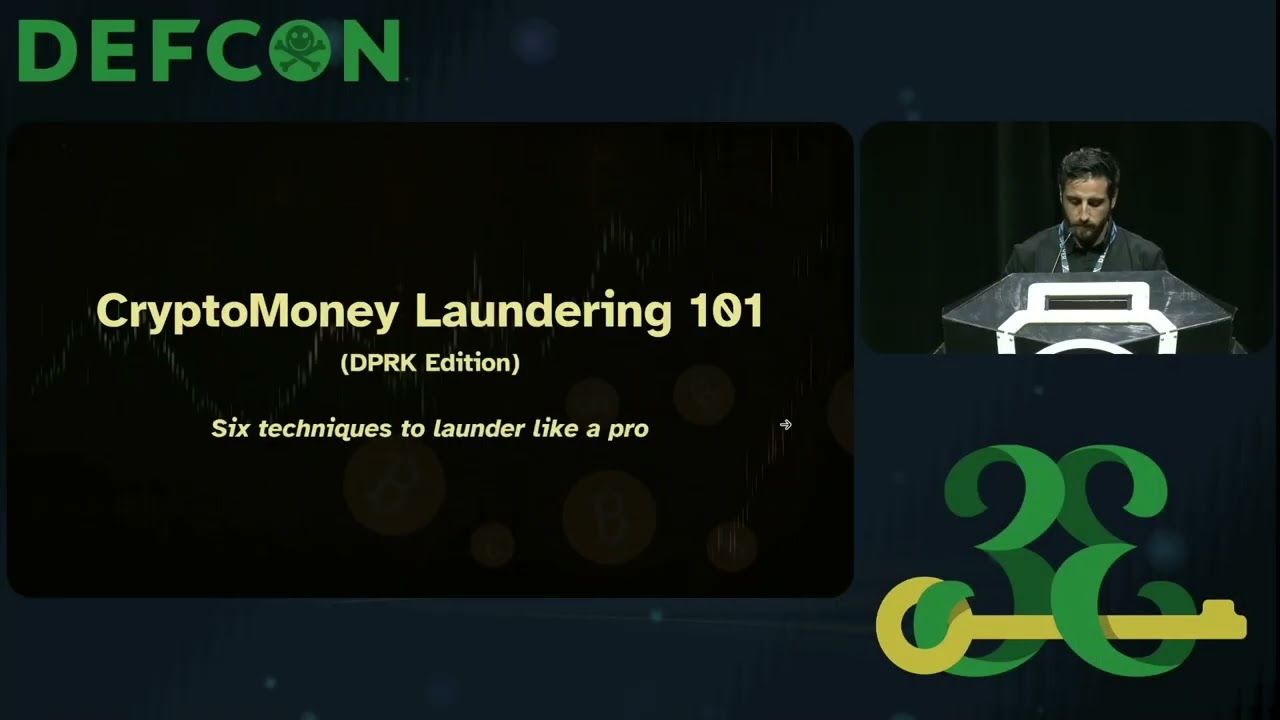
DEF CON 33: Crypto Laundering - A Deep Dive into Lazarus Group's Tactics and AI-Powered Forensics


Introduction: The Paradox of Crypto Anonymity

Cryptocurrency has permeated every facet of the digital economy. From multi-billion dollar enterprises to the very infrastructure of nascent economies, its influence is undeniable. Cybercriminals, too, have embraced cryptocurrencies, leveraging them to finance illicit operations and, crucially, to obscure the origins of stolen funds. The promise of anonymity is a core selling point, yet the inherent transparency of blockchain technology presents a fascinating paradox: while individual identities might be masked, transaction histories are public and immutable, making the act of hiding funds a sophisticated, albeit challenging, endeavor.

Case Study: The Bybit Breach (February 2025)

Our deep dive into sophisticated crypto money laundering techniques is anchored by a pivotal event: the Bybit breach, which occurred in February 2025. This incident not only resulted in significant financial losses but also unveiled advanced attack methodologies that offer critical insights into the evolving tactics of sophisticated threat actors, specifically North Korea's Lazarus Group.

Advanced Attack Vectors Exploited

The Bybit breach was not a simple smash-and-grab. Attackers employed a multi-pronged approach, demonstrating a high level of technical proficiency and social engineering prowess:

  • Compromised Third-Party Wallet Tool: Malicious JavaScript was injected into the logic of a third-party wallet utility. This allowed the attackers to subtly manipulate the behavior of smart contracts, creating backdoors for later exploitation.
  • Social Engineering and Container Hijacking: A developer within the SAFE Wallet team was targeted through sophisticated social engineering tactics. The operative was convinced to execute a fake Docker container on their machine. This seemingly innocuous action granted the attackers persistent, deep access to the developer's environment.

Lazarus Group's Crypto Laundering Workflow

Once access was established, the Lazarus Group executed a meticulously planned sequence of actions to launder the stolen funds. The primary objective was to obscure the trail of both ETH and ERC-20 tokens:

  1. Hijacking Proxy Contracts: The attackers gained control over critical proxy contracts. These contracts act as intermediaries, and by controlling them, the attackers could reroute transactions and execute unauthorized operations.
  2. Stealth Withdrawals: Leveraging their control, they initiated stealth withdrawals of substantial amounts of ETH and various ERC-20 tokens from the compromised accounts.
  3. Decentralized Exchange (DEX) Laundering: The stolen assets were immediately funneled into decentralized exchanges. DEXs offer greater anonymity compared to centralized exchanges, making it harder to link transactions back to the original source.
  4. Wallet Splitting and Obfuscation: To further break the chain of custody, the laundered funds were split across numerous wallets. This technique, known as dusting or sharding, makes forensic analysis exponentially more complex.
  5. Cross-Chain Bridging: The trail was then deliberately moved across different blockchains. Specifically, the assets were bridged to Bitcoin (BTC). This cross-chain movement adds another layer of complexity, as it involves different cryptographic protocols and transaction structures.
  6. Mixer Utilization: Finally, the funds were passed through cryptocurrency mixers like Wasabi Wallet. Mixers obfuscate transaction history by pooling funds from multiple users and making it difficult to trace individual transactions.

Automating Investigations with AI

The sheer volume and complexity of these laundering steps can overwhelm traditional forensic methods. This is where Artificial Intelligence (AI) and advanced analytics become indispensable. By analyzing the $1.46 billion Bybit hack data, Thomas Roccia's work at DEF CON 33 highlights how AI can:

  • Automate Transaction Tracking: AI algorithms can process massive datasets of blockchain transactions, identifying patterns, anomalies, and links that human analysts might miss. This includes tracking funds across multiple wallets, DEXs, and cross-chain bridges.
  • Accelerate Investigations: AI can significantly reduce the time required for forensic investigations. By flagging suspicious activities and potential laundering routes in near real-time, it allows investigators to prioritize efforts and respond more effectively to emerging threats.
  • Predictive Analysis: Advanced AI models can potentially predict future laundering patterns based on historical data, enabling proactive defense strategies.

Ethical Warning: The following techniques should only be used in controlled environments and with explicit authorization. Malicious use is illegal and can lead to severe legal consequences.

Defensive Strategies and Future Outlook

Combating sophisticated crypto laundering requires a multi-layered approach:

  • Enhanced Smart Contract Audits: Rigorous security audits are crucial to identify vulnerabilities in smart contracts before they can be exploited.
  • Robust Third-Party Risk Management: Companies must implement stringent vetting processes for all third-party tools and services.
  • Developer Security Training: Educating developers on social engineering tactics and secure coding practices is paramount.
  • Advanced Threat Intelligence: Leveraging AI and threat intelligence platforms to monitor for suspicious activities and emerging attack vectors.
  • Regulatory Cooperation: Increased collaboration between law enforcement agencies, cybersecurity firms, and crypto platforms is vital to track and apprehend cybercriminals.

The Engineer's Arsenal: Essential Tools and Resources

To stay ahead in the cat-and-mouse game of cybersecurity and crypto forensics, an operative must be equipped with the right tools:

  • Blockchain Analysis Platforms: Tools like Chainalysis, Elliptic, and CipherTrace provide advanced analytics for tracking cryptocurrency transactions.
  • AI/ML Frameworks: Libraries such as TensorFlow and PyTorch can be used to build custom AI models for anomaly detection and pattern recognition in transaction data.
  • Smart Contract Security Tools: Static and dynamic analysis tools (e.g., Mythril, Slither) for identifying vulnerabilities in smart contracts.
  • Network Forensics Tools: Wireshark and other packet analysis tools for monitoring network traffic, especially relevant when dealing with compromised systems.
  • Container Security Tools: Tools for scanning and securing Docker environments.
  • Books & Certifications: "Mastering Bitcoin" by Andreas M. Antonopoulos for foundational knowledge, CompTIA Security+ for general cybersecurity principles, and specialized courses on blockchain forensics.

Comparative Analysis: Centralized vs. Decentralized Laundering

The methods employed by Lazarus Group highlight the shift towards decentralized laundering techniques. Here's a comparative look:

  • Centralized Exchanges (CEXs): Historically, criminals used CEXs by creating fake identities or using compromised accounts. However, Know Your Customer (KYC) regulations have made this increasingly difficult. Early stages of laundering might still involve CEXs for initial conversion, but the bulk of obfuscation now leans towards decentralized methods. CEXs offer easier on-ramps/off-ramps but are heavily regulated.
  • Decentralized Exchanges (DEXs) & Mixers: These platforms offer greater pseudonymity. The Bybit breach's laundering path via DEXs, followed by cross-chain transfers and mixers, exemplifies this trend. The advantage is a significantly more complex forensic trail. The disadvantage for criminals is that the underlying blockchain data is still public, albeit fragmented and anonymized. AI and advanced graph analysis are increasingly effective at de-mixing and tracing through these complex paths.

Engineer's Verdict: The Evolving Threat Landscape

The Lazarus Group's sophisticated attack on Bybit serves as a stark reminder that the cryptocurrency landscape is a dynamic battlefield. Anonymity is a myth; pseudonymity and obfuscation are the goals. As blockchain technology matures, so do the methods used to exploit it. The successful laundering of stolen funds, especially at this scale, underscores the critical need for continuous innovation in cybersecurity defenses, particularly in the realm of AI-driven forensic analysis. The industry must adapt rapidly to counter these evolving threats, ensuring that the promise of secure digital assets is not undermined by sophisticated criminal enterprises.

Frequently Asked Questions

Q1: Are all cryptocurrencies equally easy to launder?

No. While all blockchain transactions are public, some cryptocurrencies and networks offer enhanced privacy features (e.g., Monero, Zcash) that make laundering more difficult to trace than on public ledgers like Bitcoin or Ethereum. However, even these have potential forensic analysis techniques. The methods described in the Bybit hack rely more on transaction obfuscation techniques (DEXs, mixers, cross-chain) rather than inherently private coins.

Q2: Can blockchain analysis tools fully de-anonymize all transactions?

Not always, but they can significantly increase the probability of identifying illicit actors. Advanced tools can track funds through complex chains of transactions, identify patterns associated with known illicit actors, and even link blockchain activity to real-world identities through an exchange's KYC data or other open-source intelligence (OSINT). Mixers and privacy coins present the biggest challenges, but are not insurmountable.

Q3: How can individuals protect themselves from crypto-related cyber threats?

Practice strong cybersecurity hygiene: use complex, unique passwords; enable two-factor authentication (2FA) on all accounts; be wary of phishing attempts; secure your private keys; only use reputable exchanges and wallet providers; and conduct thorough research before interacting with new protocols or smart contracts. For developers, rigorous code auditing and secure development practices are essential.

About the Author

The Cha0smagick is a seasoned digital operative and polymath technologist, renowned for dissecting complex systems and transforming raw data into actionable intelligence. With a background forged in the trenches of cybersecurity and a passion for engineering robust solutions, The Cha0smagick operates Sectemple as a repository of critical knowledge for the elite digital community. This dossier is a testament to that ongoing mission.

Mission Debrief: Your Next Steps

Understanding these advanced crypto laundering techniques is not just about theoretical knowledge; it's about practical defense and proactive investigation. The Bybit incident is a powerful case study, and the integration of AI into blockchain forensics is rapidly becoming a standard operational procedure.

Your Mission: Execute, Share, and Debate

If this blueprint has equipped you with the intelligence to better navigate the complexities of crypto security, share it with your network. An informed operative is a dangerous operative – to the adversaries.

Do you know another operative struggling to make sense of crypto trails? Tag them in the comments below. We don't leave our own behind.

What specific blockchain forensic technique or AI application do you want deconstructed next? State your demand in the comments. Your input dictates the next mission objective.

Mission Debriefing

Engage in the discussion below. Share your insights, challenges, and questions. The most valuable intelligence is often gained through collective debriefing.

Trade on Binance: Sign up for Binance today!

The Anatomy of a Digital Heist: Mt. Gox and the Ghost in the Machine

The flickering neon of a forgotten arcade sign cast long shadows on the rain-slicked pavement outside the server farm. Inside, the hum of cooling fans was a low dirge. This wasn't just another Tuesday; it was the unveiling of a phantom, a whisper of code that had systematically bled a titan dry. Mt. Gox. The name still conjures images of lost fortunes and shattered trust. Today, we're not just recounting history; we're performing a digital autopsy on a heist that defined the early, wild west of cryptocurrency. Consider this your intelligence brief on how a seemingly invincible exchange became a cautionary ghost story.

The Genesis of a Giant: From Card Game to Crypto Mecca

Before it became a symbol of digital asset disaster, Mt. Gox was a different beast. Born from a simple idea by Jed McCaleb, it started as a platform for trading Magic: The Gathering cards. The shift to Bitcoin was a pivot born of opportunity, a move that catapulted it to global prominence. In its heyday, Mt. Gox handled an astonishing percentage of all Bitcoin transactions. For early adopters and speculators, it was the digital equivalent of Wall Street, a place where fortunes could be made, or so they thought. Its accessibility and perceived ease of use were its initial drawcards, luring a flood of new users into the then-nascent crypto market. But beneath the veneer of innovation, the foundations were already showing cracks, a subtle invitation to those who knew how to exploit a system built on enthusiasm rather than rigorous engineering.

Cracks in the Foundation: Security Lapses and the Whispers of Negligence

The honeymoon phase of Mt. Gox was short-lived. The early signs of trouble weren't a sudden eruption, but a series of persistent leaks. Multiple security breaches began to erode user confidence. We're talking about unauthorized access, account takeovers, and the gradual, almost imperceptible, disappearance of Bitcoin. These weren't sophisticated, zero-day exploits designed by nation-states; they were often the result of fundamental security oversights. Weak password policies, insufficient transaction signing mechanisms, and a general lack of awareness regarding best practices in digital asset security created an environment ripe for exploitation. The platform's infrastructure, allegedly hobbled by technical debt and a lack of rigorous security audits, became a playground for opportunists.

Then came the accusations. Mark Karpeles, the man at the helm, found himself under a microscope. Allegations of mismanagement, internal control failures, and even potential complicity, though never definitively proven in court for all charges, cast a long, dark shadow. The narrative shifted from a pioneering exchange facing technical hurdles to an entity potentially failing its users through sheer negligence. This is a crucial point for any operator or analyst: when trust erodes due to perceived or actual mismanagement, the reputational damage can be as devastating as a direct breach.

The Phantom Hand: Automated Theft and the Laundering Labyrinth

The true horror of the Mt. Gox collapse wasn't just the theft, but the method. Investigations revealed that a significant portion of the missing Bitcoins were not taken in one dramatic raid but siphoned off over time through an insidious, automated process. Think of it as a thousand tiny cuts, each barely noticeable, but accumulating into a catastrophic loss. This wasn't brute force; it was elegance in deception, exploiting subtle system flaws and transaction logic. This automated theft highlights a critical area for defenders: the need for continuous anomaly detection and behavioral analysis. It's not enough to have firewalls; you need systems that question *why* a specific transaction pattern is occurring.

The stolen assets then entered the labyrinth of cryptocurrency laundering. Moving through multiple exchanges, obfuscating trails across blockchains, the Bitcoins became ghosts in the digital ether. This underscores the immense challenge faced by law enforcement and security professionals in tracing illicit funds within the largely pseudonymous and borderless world of cryptocurrency. The lack of a centralized ledger for fiat currency makes recovery efforts exponentially more complex. This is where your understanding of blockchain analytics and chain-hopping detection tools becomes paramount. The tools and techniques used to *track* these movements, not just build defenses, are critical.

"The network is a jungle. You can build a fortress, but if the gatekeepers are asleep, the predators will eventually find their way in."

The Regulatory Void: Accountability in the Wild West

The Mt. Gox saga played out in a legal and regulatory landscape that was as undeveloped as the technology itself. In the early days of Bitcoin, the concept of regulating cryptocurrency exchanges was largely theoretical. This vacuum created an environment where accountability was difficult to enforce. When users lost their funds, the path to recourse was unclear. Were they victims of a private company's failure, or was this a crime? The lack of clear guidelines meant that identifying responsible parties and legal recourse was a protracted and often futile endeavor.

This case was a wake-up call. It forcefully demonstrated the necessity of robust regulatory frameworks. For operators and security professionals, this means understanding the evolving legal landscape, not just the technical one. Compliance with KYC (Know Your Customer) and AML (Anti-Money Laundering) regulations, while sometimes seen as a burden, are essential components of building trust and providing a safer environment for users. The absence of such frameworks in the early days of Mt. Gox was not a feature; it was a critical flaw that facilitated disaster.

The Inevitable Collapse: Bankruptcy and Billions Lost

With investigations piling up, legal battles intensifying, and mounting evidence of missing assets, Mt. Gox's financial situation became untenable. The exchange declared bankruptcy, a stark admission of defeat. The ripple effect was devastating. Billions of dollars' worth of Bitcoin, representing life savings and investments for thousands of users worldwide, vanished. This wasn't just a business failure; it was a catastrophic loss that sent shockwaves through the entire cryptocurrency ecosystem. It was a brutal, real-world demonstration of the risks inherent in a nascent and largely unaudited market.

The implosion of Mt. Gox served as a powerful, albeit painful, lesson. It highlighted the volatility and inherent risks that come with digital assets. For those building in the space, it was a mandate to prioritize security, transparency, and robust governance above all else. For users, it was a stark reminder to perform due diligence, diversify holdings, and never store all your assets on a single exchange. The ghost of Mt. Gox serves as a permanent specter, reminding us that the digital frontier, while offering immense potential, demands vigilance and a deep understanding of its inherent dangers.

Veredicto del Ingeniero: ¿Seguridad o Simple Ilusión?

Mt. Gox wasn't just an exchange; it was a case study in how ambition can outpace competence, and how a lack of foundational security can lead to spectacular failure. The automated theft mechanism revealed a level of exploitation that was both technically adept and deeply cynical. It’s a stark differentiator between the early, naive days of crypto and the sophisticated landscape we navigate today. For any organization dealing with sensitive digital assets, the Mt. Gox story is not ancient history; it's a live threat model. It teaches us that:

  • Defense in Depth is Non-Negotiable: A single point of failure is an invitation to disaster. Security must be layered at every level.
  • Audits Aren't Optional: Regular, independent security audits are crucial. Trusting your own internal assessments is a gamble.
  • Behavioral Analysis is Key: Detecting anomalies in transaction patterns is as vital as a strong firewall. Assume compromise and look for deviations.
  • Regulatory Awareness is a Defense: Understand the legal and compliance landscape. Ignorance here leads to significant operational and financial risk.
The lessons from Mt. Gox are etched in the blockchain of security best practices. Ignoring them is like walking into a dark alley with your wallet hanging out.

Arsenal del Operador/Analista

To navigate the treacherous waters of cryptocurrency security and analysis, a well-equipped operator needs more than just a good understanding of blockchain. Here's a look at some essential tools and knowledge domains:

  • Security Tools:
    • Network Analysis: Wireshark, tcpdump for deep packet inspection.
    • Vulnerability Scanners: Nessus, OpenVAS for infrastructure assessment.
    • SIEM/Log Analysis: Splunk, ELK Stack (Elasticsearch, Logstash, Kibana) for anomaly detection and threat hunting.
    • Blockchain Explorers: Blockchain.com, Etherscan.io, Blockchair.com for transaction tracing and address analysis.
    • Forensic Tools: Autopsy, Volatility Framework for digital forensics.
  • Programming & Scripting:
    • Python: Essential for scripting automated tasks, API interactions, and data analysis (libraries like Web3.py, Pandas).
    • Go: Increasingly used in blockchain development and infrastructure tooling.
    • KQL (Kusto Query Language): For advanced log analytics in Sentinel.
  • Key Readings & Certifications:
    • Books: "The Web Application Hacker's Handbook," "Mastering Bitcoin," "Black Hat Python."
    • Certifications: OSCP (Offensive Security Certified Professional), CISSP (Certified Information Systems Security Professional), C|EH (Certified Ethical Hacker), specialized blockchain forensics courses.
  • Exchanges & Wallets: Familiarity with major cryptocurrency exchanges (e.g., Binance, Coinbase, Kraken) and various wallet types (hot, cold, hardware wallets like Ledger or Trezor) is crucial for understanding transaction flows and security postures.

Taller Práctico: Fortaleciendo tu Postura de Seguridad en Exchanges

The Mt. Gox incident serves as a potent reminder that relying solely on an exchange for security is akin to leaving your valuables in a glass box. Here’s how to implement a more robust defense-in-depth strategy:

  1. Implementar Autenticación Fuerte:
    • Habilitar 2FA/MFA: Siempre, sin excepción. Prefiere aplicaciones de autenticación (Google Authenticator, Authy) sobre SMS, ya que los SIM swaps son una amenaza real.
    • Claves de Seguridad: Si el exchange lo soporta y tienes una, considera usar una clave de seguridad física (YubiKey, FIDO2) como capa adicional.
  2. Gestión de Riesgos de Fondos:
    • Retirar Fondos "Calientes": No mantengas grandes cantidades de cripto en el exchange. Transfiere los fondos que no estés operando activamente a una billetera fría (hardware wallet) controlada por ti. Esto mitiga el riesgo de fallos en la seguridad del exchange.
    • Diversificar Exchanges: Si utilizas múltiples exchanges, no concentres todos tus activos ni tus claves de acceso en uno solo.
  3. Monitoreo y Alertas:
    • Configurar Alertas de Inicio de Sesión: Muchos exchanges permiten configurar notificaciones por correo electrónico o SMS para cada nuevo inicio de sesión, especialmente desde dispositivos o ubicaciones desconocidas.
    • Revisar Historial de Transacciones: Periódicamente, revisa tu historial de transacciones para detectar cualquier actividad sospechosa o no autorizada.
  4. Conciencia de Phishing:
    • Verificar URLs: Siempre verifica que estás en el sitio web oficial del exchange. Los ataques de phishing a menudo utilizan dominios falsos muy similares.
    • Desconfiar de Comunicaciones No Solicitadas: Ten extrema precaución con correos electrónicos, mensajes o llamadas que soliciten información personal o credenciales de acceso, incluso si parecen provenir del exchange.

Preguntas Frecuentes

  • ¿Qué causó exactamente la quiebra de Mt. Gox? La quiebra fue atribuida a una combinación de hackeos continuos que resultaron en la pérdida de cientos de miles de Bitcoins, mala gestión interna y falta de controles de seguridad adecuados, lo que llevó a una insolvencia masiva.
  • ¿Se recuperaron los Bitcoins perdidos de Mt. Gox? Una parte de los Bitcoins se recuperó durante el proceso de quiebra y se distribuyó a los acreedores (los usuarios afectados), pero la gran mayoría de los fondos robados nunca se recuperó.
  • ¿Son los exchanges de criptomonedas actuales más seguros que Mt. Gox? Sí, en general, los exchanges más grandes y establecidos han implementado medidas de seguridad significativamente más robustas (como 2FA, billeteras frías, auditorías regulares) en comparación con Mt. Gox en su apogeo. Sin embargo, el riesgo inherente de dejar activos en una plataforma de terceros siempre existe.
  • ¿Qué lecciones aprendió la industria cripto de Mt. Gox? Mt. Gox fue un catalizador para la mejora en seguridad, la demanda de regulaciones más claras y la conciencia sobre la importancia de las billeteras frías para el almacenamiento de activos a largo plazo.

El Contrato: Tu Misión de Vigilancia Defensiva

La historia de Mt. Gox no es solo un cuento de hadas sobre la caída de un gigante; es un tratado de ingeniería social y fallos de seguridad que resuena hasta hoy. Tu misión, si decides aceptarla, es aplicar estas lecciones. Investiga la postura de seguridad de tus propios activos digitales. ¿Estás dejando tus Bitcoins en una caja de cristal? Considera esto tu llamado a la acción. Implementa las medidas del taller práctico, diversifica tu almacenamiento y nunca confíes ciegamente en un solo punto de falla. La seguridad criptográfica no es un destino, es un viaje constante de mitigación de riesgos. Ahora ve y fortalece tu perímetro digital.

Para una inmersión más profunda en cómo protegerte y entender las amenazas del mundo digital, te invitamos a explorar nuestro blog en Sectemple. Y para contenido educativo directo a tu bandeja de entrada, suscríbete a nuestro canal de YouTube: cha0smagick's Lab.