{/* Google tag (gtag.js) */} SecTemple: hacking, threat hunting, pentesting y Ciberseguridad
Showing posts with label hacker culture. Show all posts

Dominating the Digital Frontier: The Untold Story of the Xbox Underground Hackers


Introduction: The Digital Shadows

In the sprawling, often opaque world of cybersecurity, few stories capture the imagination quite like those of young, audacious individuals who push the boundaries of digital security. For years, a clandestine group of teenagers operated within the digital underbelly, their sights set on one of the most formidable targets: the world's leading game developers, including the behemoth that is Xbox. This wasn't about petty mischief; it was a sustained, multi-year campaign that demonstrated a sophisticated understanding of network architecture and vulnerability exploitation. This dossier unpacks their incredible journey, dissecting the methods, the motivations, and the lasting implications of their actions. Prepare for a deep dive into the heart of the 'Xbox Underground'.

Support our channel and check out https://fern.deals/odoo94 to create your website for free!

The Genesis of the Underground

The digital landscape of the early 2000s was a vastly different frontier. Online gaming was exploding, and with it, the infrastructure supporting these immersive worlds became a prime target for those with the skills and curiosity to probe its defenses. The narrative of the "Xbox Underground" begins not with a singular event, but with a confluence of factors: the burgeoning online gaming culture, the relative immaturity of corporate cybersecurity in the sector, and the accessibility of technical knowledge to a generation growing up with computers. This era saw the rise of hacker collectives that weren't necessarily motivated by malice, but by the sheer thrill of the challenge, a desire for recognition within their peer group, and the pursuit of knowledge for its own sake. Entry points were often simpler, social engineering more effective, and the digital defenses, while present, were less sophisticated than today's multi-layered security protocols. It was fertile ground for a group of exceptionally talented teenagers to begin etching their names into the annals of digital history.

The Architect: admin060606

At the core of this operation was an individual known by the handle 'admin060606'. This figure emerged as one of the primary architects, demonstrating a profound technical aptitude and a strategic mind. Their involvement wasn't just about finding a single vulnerability; it was about understanding the broader network topology, identifying critical assets, and planning multi-stage intrusions. The name itself, 'admin060606', hints at a deep understanding of system administration privileges and potentially a reference to brute-force or common administrative credentials, a tactic that, while seemingly basic, can be devastatingly effective against poorly secured systems. This individual likely orchestrated the initial footholds, mapped internal networks, and potentially developed or deployed custom tools to maintain persistence and exfiltrate data. Their ability to operate undetected for years points to meticulous planning, stealthy execution, and a deep understanding of how to evade detection by security monitoring systems.

The Ghost in the Machine: Durango

Another key player, operating under the alias 'Durango', represented a different facet of the group's capabilities. While admin060606 might have focused on the strategic architecture of the breaches, Durango is often associated with the more hands-on, in-the-trenches exploitation and data acquisition. This individual likely possessed exceptional skills in network reconnaissance, vulnerability scanning, and the actual exploitation of identified weaknesses. Their role was critical in navigating the internal systems once access was gained, moving laterally, and ensuring that the objectives of the hack were met. The moniker 'Durango' itself could be a subtle nod to the original Xbox codename, suggesting a deep familiarity with the platform or a deliberate choice to signify their mastery. Their operational effectiveness was a testament to their ability to blend in with normal network traffic, exploit zero-day vulnerabilities, or leverage previously discovered backdoors.

The Enigma: Person A

The identity of "Person A" remains shrouded in mystery, a common tactic in the hacker community to obscure the full scope of an operation or protect individuals. This anonymity, however, doesn't diminish their potential significance. Person A could have represented a specialist within the group, perhaps focusing on a particular area like social engineering, reverse engineering, or the development of custom malware. Alternatively, this designation might have been used to represent a more external-facing role, such as a broker of information or a liaison with other underground elements. The very existence of such an enigmatic figure highlights the complex, multi-layered nature of sophisticated hacking operations, where different skill sets and roles are often compartmentalized to enhance security and operational effectiveness. Understanding the potential role of "Person A" is key to appreciating the full breadth of the Xbox Underground's capabilities.

Wired Intelligence: Analyzing the Breach

The detailed reporting by Wired provides invaluable intelligence on the operations of these young hackers. Their exposé delves into the intricate web of connections, the specific techniques employed, and the timeline of their exploits. By cross-referencing this journalistic investigation with the known operational timelines of the group, we can begin to map their attack vectors. These likely involved a combination of methods:

  • Network Exploitation: Identifying and exploiting vulnerabilities in the network infrastructure of game developers, potentially targeting unpatched servers, misconfigured firewalls, or insecure remote access points.
  • Credential Harvesting: Employing techniques like phishing, credential stuffing, or exploiting weak password policies to gain access to administrative accounts.
  • Social Engineering: Manipulating employees into divulging sensitive information or granting unauthorized access, a tactic that remains surprisingly effective even today.
  • Custom Tool Development: Creating bespoke malware or exploits tailored to bypass specific security measures, demonstrating a high level of technical proficiency.
  • Persistence and Lateral Movement: Establishing covert channels and moving stealthily within compromised networks to access sensitive data or gain deeper control.

The Wired article serves as a crucial piece of evidence, corroborating the sophistication and sustained nature of these breaches.

Darknet Diaries: A Hacker's Narrative

The "Darknet Diaries" podcast, particularly episodes 45 and 46, offers a unique, narrative-driven perspective on this story. By presenting the events through interviews and compelling storytelling, it humanizes the hackers and provides insights into their mindset and motivations. These episodes likely explore:

  • The Psychological Drivers: What compelled these teenagers to undertake such high-stakes activities? Was it rebellion, intellectual curiosity, peer pressure, or a desire to prove themselves?
  • Operational Details: Anecdotes and insider accounts of the hacks themselves, offering a more granular view of the challenges and triumphs.
  • The Underground Culture: Insights into the communication channels, the ethics (or lack thereof), and the social dynamics within the hacker communities of that era.
  • The Consequences: The eventual fallout, including potential legal repercussions and the impact on their lives.

Listening to these episodes provides a crucial layer of context, transforming a technical recounting of events into a compelling human drama unfolding in the digital realm.

The Ethical Hacker's Arsenal

Understanding the techniques used by groups like the Xbox Underground is paramount for building robust defenses. The knowledge gained from analyzing their methods directly informs the tools and strategies employed by ethical hackers and cybersecurity professionals. Key elements of this "arsenal" include:

  • Network Scanning and Enumeration Tools: Nmap, Masscan, and specialized scripts to map network topology and identify open ports and services.
  • Vulnerability Scanners: Nessus, OpenVAS, and Metasploit Framework to detect known vulnerabilities in software and systems.
  • Packet Analysis Tools: Wireshark and tcpdump to inspect network traffic for anomalies or sensitive data.
  • Exploitation Frameworks: Metasploit, Cobalt Strike, and custom-built exploit kits to test and demonstrate vulnerabilities.
  • Password Cracking Tools: John the Ripper, Hashcat, and dictionary/brute-force attack tools to test password strength.
  • Social Engineering Toolkits: SET (Social-Engineer Toolkit) and custom phishing frameworks.
  • Threat Intelligence Platforms: Aggregating data on known threats, attacker TTPs (Tactics, Techniques, and Procedures), and Indicators of Compromise (IoCs).
  • Secure Coding Practices: Educating developers on writing secure code and performing code reviews to prevent common vulnerabilities like SQL injection, XSS, and buffer overflows.
  • Intrusion Detection/Prevention Systems (IDPS): Monitoring network traffic for malicious activity and blocking known attack patterns.
  • Security Information and Event Management (SIEM) Systems: Centralizing and analyzing security logs from various sources to detect and respond to threats.

Disclaimer: The tools and techniques mentioned are for educational purposes only. Their application should be strictly limited to authorized penetration testing and cybersecurity auditing environments. Unauthorized access to computer systems is illegal.

Comparative Analysis: Xbox Hacking vs. Modern Cyber Threats

While the exploits of the Xbox Underground were groundbreaking for their time, they offer a stark contrast to the sophisticated, often state-sponsored cyber threats we face today. Here’s a breakdown:

  • Scale and Sophistication: Early Xbox hacks, while impressive, were often focused on specific targets and methodologies. Modern threats, such as advanced persistent threats (APTs), employ highly customized malware, zero-day exploits at scale, and intricate supply chain attacks that can cripple entire industries.
  • Motivation: The motivations of the Xbox hackers appeared to be a mix of curiosity, challenge, and perhaps notoriety within hacker circles. Today's threats are driven by diverse motives: financial gain (ransomware, data theft), espionage (state-sponsored actors), political disruption, and even ideological warfare.
  • Defensive Capabilities: The cybersecurity landscape has evolved dramatically. Today's defenses include AI-driven threat detection, Zero Trust architectures, advanced endpoint detection and response (EDR), and highly regulated compliance frameworks. Early defenses were comparatively rudimentary.
  • Attack Vectors: While some vectors remain similar (e.g., phishing), modern attacks leverage cloud infrastructure vulnerabilities, IoT device compromises, and sophisticated supply chain attacks that target software dependencies.

In essence, the Xbox Underground story is a fascinating historical case study in early network exploitation, but the current threat landscape demands a far more advanced and multi-faceted approach to cybersecurity.

The Engineer's Verdict

The saga of the Xbox Underground hackers is a potent reminder of the persistent cat-and-mouse game between attackers and defenders. These teenagers, operating with limited resources but boundless ingenuity, managed to penetrate systems that were ostensibly designed for security. Their story underscores critical lessons: technology is only as secure as its implementation, human factors (like social engineering) remain a significant vulnerability, and the pursuit of knowledge, when misdirected, can have profound consequences. For ethical hackers and security professionals, their exploits serve as a historical blueprint, highlighting the need for continuous vigilance, adaptive defense strategies, and a deep understanding of how attackers think and operate. The digital frontier is ever-expanding, and the lessons from these early pioneers are still relevant in navigating its complexities.

Frequently Asked Questions

Q1: Were the Xbox hackers prosecuted?
A: While specific details vary, individuals involved in significant hacking operations, especially those targeting large corporations, often face legal repercussions, including criminal charges and civil lawsuits, depending on the jurisdiction and the extent of the damage caused.

Q2: What were the main targets of the Xbox Underground?
A: The primary focus was on major game developers and entities associated with the Xbox platform, aiming to breach their internal systems and potentially access sensitive information like game code, player data, or intellectual property.

Q3: How did they maintain anonymity for so long?
A: Anonymity was likely achieved through a combination of techniques, including using anonymizing networks (like early VPNs or Tor precursors), employing sophisticated operational security (OpSec) practices, using disposable communication channels, and compartmentalizing information within the group.

Q4: Is this type of hacking still possible today?
A: While the specific vulnerabilities of that era are long patched, the fundamental principles of exploiting network weaknesses, social engineering, and credential harvesting remain relevant. However, modern cybersecurity defenses are significantly more robust, making sustained, large-scale breaches much more difficult without advanced techniques and resources.

About The Cha0smagick

"The Cha0smagick" is a seasoned digital operative, a polymath engineer, and a leading ethical hacker forged in the crucible of real-world cyber engagements. With a pragmatic and analytical approach, honed by years of dissecting seemingly impenetrable systems, The Cha0smagick translates complex technical knowledge into actionable blueprints. Their expertise spans code alchemy, data forensics, cryptographic analysis, and the ever-evolving landscape of digital vulnerabilities. At Sectemple, they forge dossiers of unparalleled depth, transforming technical insights into the ultimate guides for the discerning digital operative.

Mission Debrief: Your Next Steps

The intelligence within this dossier has equipped you with a comprehensive understanding of the Xbox Underground's exploits. Now, it's time to operationalize this knowledge.

Your Mission: Execute, Share, and Debate

If this deep dive into the history of Xbox hacking has illuminated the path for your own cybersecurity endeavors, share this dossier with your network. Knowledge is a force multiplier, and information of this caliber should be disseminated to those who can wield it responsibly.

Do you know a fellow operative grappling with the complexities of legacy system security or the history of cyber exploits? Tag them in the comments below. A true operative never leaves a teammate in the dark.

What digital frontier or historical hack should be our next target for investigation? Voice your demands in the comments. Your input dictates the direction of our next mission.

Have you implemented strategies inspired by historical security breaches in your own work? Share your experiences and lessons learned as a comment below. Intelligence must flow freely.

Debriefing of the Mission

Engage in the discussion. Share your insights, ask your questions, and contribute to the collective intelligence. The comments section is our debriefing room. Let's dissect this mission further.

For those looking to diversify their digital assets or explore the financial frontier, remember that strategic planning is key. Consider exploring the ecosystem at Binance, a platform that offers a wide range of tools for managing digital assets.

Trade on Binance: Sign up for Binance today!

The L0pht Heavy Industries Dossier: A Deep Dive into the Legendary Hacking Collective's Media Archives (1994-1999)


STRATEGY INDEX

Operation L0pht: The Genesis

In the nascent days of the internet, before firewalls were robust and cybersecurity was a mainstream concern, a group of individuals known as L0pht Heavy Industries emerged from the shadows. Operating primarily from Boston, Massachusetts, L0pht wasn't just a collection of hackers; they were pioneers, researchers, and, in their own way, educators. Their work laid critical groundwork for understanding digital vulnerabilities, influencing both the offensive and defensive landscapes of what we now recognize as cybersecurity. This dossier delves into their historical public footprint, meticulously archived from their early media appearances between 1994 and 1999.

The Media Archives: A VHS Time Capsule (1994-1999)

The following compilation represents a significant portion of L0pht Heavy Industries' public television media coverage. Originally distributed as a VHS tape, this collection offers an unfiltered look at how this influential hacking group was perceived and presented by mainstream media during a pivotal era of internet growth and evolving digital threats. Understanding these appearances is crucial for grasping the historical context of cybersecurity awareness and the early formation of the hacker identity in the public eye.

0:05 - CyberMania 1994, TBS SuperStation, November 5, 1994

This early segment from CyberMania provides a foundational glimpse into L0pht's public debut. Broadcast on TBS SuperStation, it marks one of the first instances where a mainstream audience was introduced to the concepts and personalities associated with advanced computing and, by extension, the burgeoning hacker culture. The segment likely touched upon the early internet, its potential, and perhaps the nascent concerns about its security. This appearance is critical for understanding the initial public perception of hacker groups before they became widely understood as significant entities in national security and corporate defense.

4:56 - Unauthorized Access, Annaliza Savage, March, 1995 (L0pht segment only)

This segment, focusing solely on L0pht, from Annaliza Savage's "Unauthorized Access" program offers a deeper dive into the group's activities and philosophy. By 1995, the internet was expanding rapidly, and discussions around unauthorized access were becoming more prevalent. This coverage likely explored the technical aspects of hacking and the ethical considerations that were beginning to surround the practice, even within the hacker community itself. It's a critical piece for understanding L0pht's self-representation and their early engagement with media narratives surrounding their work.

7:10 - The Internet Cafe, PCTV, October 2, 1996

"The Internet Cafe" on PCTV likely provided a more accessible and perhaps localized view of internet culture and its associated communities. L0pht's inclusion here suggests their growing prominence within the New England tech scene. This appearance might have focused on demystifying the internet for a broader audience, with L0pht serving as examples of the technically adept individuals navigating this new digital frontier. It’s a snapshot of how the practical application of internet technology was being presented to the public.

7:41 - New England Cable News, March 20, 1997

Regional news outlets like New England Cable News played a crucial role in disseminating information about emerging technologies and their societal impact. L0pht’s appearance here indicates their increasing recognition within their local community, potentially highlighting their role as experts or even cautionary tales in the evolving digital age. This coverage would have aimed to inform the local populace about the realities of computer security and the activities of groups like L0pht.

14:21 - Horizon: Inside the Internet, BBC, May 27, 1997 (removed due to complaint)

The BBC's "Horizon" series is renowned for its in-depth scientific and technological documentaries. L0pht's inclusion in "Inside the Internet" signifies their perceived importance in the global discussion about the internet's future and its inherent risks. The fact that this segment was later removed due to a complaint is particularly noteworthy. It suggests the content may have been highly sensitive, perhaps revealing too much about security vulnerabilities or challenging established narratives in a way that drew significant objection. This removal itself becomes a point of historical analysis regarding censorship and the sensitive nature of cybersecurity information.

14:26 - New England Cable News, March 18, 1998

A subsequent appearance on New England Cable News a year later suggests L0pht's continued relevance and perhaps an evolving narrative surrounding their public presence. By 1998, the internet was more deeply integrated into daily life, and discussions about cybercrime and security were intensifying. This segment might have focused on the increasing sophistication of threats and L0pht's perspective on how to address them, or perhaps their transition from purely research-oriented to more involved in public policy discussions.

17:19 & 20:28 - Witness: No Place To Hide, CBC, Part 1 & 2, April 9 & 16, 1998

The Canadian Broadcasting Corporation's (CBC) "Witness" series often tackled complex social and technological issues. This two-part documentary featuring L0pht likely delved into the human aspect of hacking – the motivations, the individuals, and the societal implications. Titled "No Place To Hide," the series' name itself underscores the growing sense of vulnerability in an interconnected world. These segments are invaluable for understanding the narrative framing of hackers as potential threats but also as individuals with unique insights into digital security.

24:44 - The NewHour with Jim Lehrer, PBS, May 8, 1998

An appearance on PBS's "The NewHour with Jim Lehrer" signifies a significant step into mainstream, high-level public discourse. This platform typically engaged with serious policy and societal issues. L0pht's participation suggests that their expertise was recognized as relevant to national and international policy discussions regarding technology and security. This interview likely focused on the broader implications of hacking and cybersecurity for government, business, and the public.

31:36 - United States Senate Testimony, CSPAN, May 19, 1998

Perhaps the most critical public appearance in this archive is L0pht's testimony before the United States Senate. This event marked a major transition, with a prominent hacker group being formally invited to advise or inform governmental policy. Their testimony likely addressed the state of cybersecurity, the capabilities of malicious actors, and potentially recommendations for legislative action. This is a crucial historical moment where the hacker community directly engaged with legislative power, shaping perceptions and potentially influencing future cybersecurity legislation and enforcement.

1:30:40 - Modern Times, ORF Austria, May 29, 1998 (portion of audio removed due to complaint)

Coverage extended beyond North America, as evidenced by this segment from ORF Austria's "Modern Times." This indicates L0pht's international recognition as a significant entity in the global cybersecurity conversation. Similar to the BBC's "Horizon" segment, the removal of a portion of the audio due to a complaint again highlights the sensitive and potentially controversial nature of the information being discussed. It underscores the challenges in reporting on cybersecurity topics, especially concerning the capabilities and methods of skilled hackers.

1:32:46 - CNN Sunday Morning, August 16, 1998

CNN, as a major global news network, provided L0pht with a platform to reach an even wider audience. A Sunday morning feature suggests an effort to present technology and security issues in a way that was accessible and engaging to a broad demographic. This appearance likely focused on the growing concerns about internet security and the role of groups like L0pht in highlighting these issues to the public and policymakers.

1:35:03 - Digital Planet: Cyberwar, BBC, January 4, 1999

Concluding this archival look, the BBC's "Digital Planet: Cyberwar" segment from early 1999 is particularly prescient. By this time, the discourse had clearly shifted towards more aggressive terminology like "Cyberwar." L0pht's inclusion in a discussion about cyberwarfare demonstrates their recognized expertise in understanding potential state-sponsored digital conflicts and advanced persistent threats. This segment likely explored the geopolitical implications of cybersecurity and the evolving nature of digital conflict.

The L0pht Legacy: Shaping Modern Cybersecurity

L0pht Heavy Industries played an undeniable role in the evolution of cybersecurity. Their public appearances, particularly their Senate testimony, helped to legitimize the study of computer vulnerabilities and pushed the conversation towards proactive defense and responsible disclosure. They transitioned from being perceived as mere script kiddies to recognized experts whose insights into system weaknesses were sought after by governments and corporations alike. Their work fueled the development of security research, penetration testing methodologies, and the broader understanding of threat landscapes we navigate today. Many of the fundamental principles of ethical hacking and security auditing have roots in the explorations conducted by groups like L0pht.

The Elite Operative's Arsenal: Essential Resources

To truly understand the landscape L0pht navigated and to build upon their legacy, an operative requires a robust set of tools and knowledge. Here are essential resources:

  • Books: "The Cuckoo's Egg" by Clifford Stoll, "Cult of the Dead Cow: How the Original Hip-Hop Hackers Changed Software," and foundational texts on networking and cryptography.
  • Platforms: GitHub for code repositories and collaboration, Stack Overflow for problem-solving, and specialized forums for deep technical discussions.
  • Learning Environments: Virtual labs like Hack The Box, TryHackMe, and dedicated CTF (Capture The Flag) platforms are crucial for practical skill development.
  • News & Analysis: Following reputable cybersecurity news outlets (e.g., KrebsOnSecurity, The Hacker News, Bleeping Computer) and threat intelligence reports is vital.
  • For Cloud Professionals: Certifications like AWS Certified Security – Specialty, Azure Security Engineer Associate, and Google Professional Cloud Security Engineer are paramount for understanding modern infrastructure security.

Comparative Analysis: L0pht's Influence vs. Modern Security Think Tanks

L0pht Heavy Industries operated in an era where the very concept of cybersecurity was being defined. Their influence stemmed from hands-on research and a direct confrontation with system vulnerabilities. In contrast, modern cybersecurity think tanks and research firms often operate with vastly more resources, sophisticated methodologies, and a focus on policy, threat intelligence, and enterprise solutions. While L0pht's impact was foundational, shaping the initial discourse and highlighting critical gaps, today's landscape benefits from a more formalized and institutionalized approach. However, L0pht's legacy of independent research and public advocacy remains a powerful precedent, emphasizing the importance of individual expertise and the continuous need to challenge the status quo in digital defense.

Frequently Asked Questions

What was L0pht Heavy Industries?

L0pht Heavy Industries was a prominent American hacker collective active primarily in the 1990s. They were known for their research into computer system vulnerabilities and their engagement with the public and government on cybersecurity issues.

Why is L0pht Heavy Industries historically significant?

Their significance lies in their early contributions to understanding and publicizing computer security risks. Their testimony before the US Senate in 1998 was a landmark event, bringing hacker perspectives directly into policy discussions.

What is the "L0pht Heavy Industries Video Press Kit (1994-1999)"?

It's a collection of television media appearances and interviews featuring members of L0pht Heavy Industries, originally released on VHS, documenting their public presence during a critical period of internet development.

Were L0pht members malicious hackers?

While they possessed advanced technical skills often associated with hacking, L0pht members largely focused on research and understanding vulnerabilities. Their public engagement and Senate testimony suggest an intent towards improving security rather than causing harm, positioning them closer to the ethical hacking or security research spectrum.

About The Cha0smagick

The Cha0smagick is a seasoned digital operative, a polymath technologist, and an elite ethical hacker with extensive experience in the trenches of cyberspace. Known for dissecting complex systems and transforming raw data into actionable intelligence, The Cha0smagick operates at the intersection of engineering, security, and deep analysis. This dossier is a product of that relentless pursuit of knowledge and practical application, distilled for the discerning operative.

Mission Debrief: Your Next Steps

This exploration into the L0pht Heavy Industries archives serves as a critical lesson in the history and evolution of cybersecurity. Understanding the pioneers who navigated the early digital frontier provides invaluable context for today's complex threat landscape.

Your Mission: Analyze, Archive, and Advance

If this deep dive into L0pht's media footprint has illuminated your understanding of cybersecurity's historical trajectory, share this dossier with your network. Knowledge is a critical asset, and its dissemination strengthens our collective defense.

Identify any gaps in public historical archives related to early hacker groups. What other collectives or individuals warrant similar deep dives?

Consider the ethical implications of publicizing vulnerabilities – a debate L0pht actively participated in. How do these historical discussions inform current responsible disclosure policies?

For those operating in the financial tech space or exploring decentralized systems, understanding the historical evolution of digital trust and security is paramount. A pragmatic approach to asset management often involves diversification. To explore secure and efficient ways to manage digital assets, consider opening an account on Binance and exploring the global cryptocurrency ecosystem.

Debriefing of the Mission

What are your key takeaways from L0pht's media appearances? What parallels do you draw between their era and the current cybersecurity challenges? Engage in the comments below. Your intelligence is vital for our ongoing operations.

Trade on Binance: Sign up for Binance today!

Anatomy of a Terrorist-Linked SQL Injection: A Hacker Documentary Deep Dive

The flickering monitor cast long shadows, a lone beacon in the digital night. In this documentary, we pull back the curtain on a chilling nexus: a hacker, once a ghost in the machine, now entangled in the dark web's most dangerous alliances. This isn't just a story; it's an autopsy of compromised systems and corrupted intent, focusing on an Albanian operative who crossed the ultimate line.

The target: an American firm. The weapon: SQL injection, a classic exploit gaining new, sinister purpose. The payload: malware, opening doors for more than just data theft. This is a true crime narrative of the digital age, a stark reminder that the lines between cybercrime, organized crime, and even terrorism are alarmingly blurred.

Join us as we dissect this case, not to replicate, but to understand and fortify. Because in the shadowy alleys of the internet, knowledge is the first line of defense.

The Escalation of Cyber Threats: A Global Imperative

The cybercrime landscape is not static; it's a hydra, constantly regenerating. We're witnessing an exponential surge in incidents, each with the potential to cripple individuals, shatter corporate infrastructures, and destabilize nations. The motives are as varied as the attackers themselves: cold, hard cash driving ransomware gangs, political ideologies fueling state-sponsored attacks, and now, the terrifying specter of terrorism leveraging digital tools.

Understanding the 'why' behind these attacks is paramount. It moves us from passive victims to active defenders. Ignoring the gravity of this digital war is an invitation to disaster. Safeguarding your digital presence isn't an option; it's a necessity for survival in the 21st century.

Deconstructing the Attack Vector: SQL Injection and Malware Deployment

Hackers aren't magicians; they are exploiters of opportunity, masters of finding the cracks in the digital armor. This case highlights a prevalent, yet often underestimated, vulnerability: SQL injection. It's the digital equivalent of whispering an unauthorized command to a guard, tricking them into revealing secrets or opening restricted doors.

SQL injection attacks prey on applications that improperly handle user input, allowing attackers to manipulate database queries. The consequences can range from data exfiltration—stealing sensitive customer information or intellectual property—to complete database compromise. In this instance, it served as the entry point for a more pernicious threat: the installation of malware.

The primary lesson here isn't about the mechanics of the attack itself, but the critical importance of secure coding practices. Input validation isn't a suggestion; it's a fundamental requirement. Regular system audits and penetration testing are not expenses; they are investments in resilience. Ignoring these preventative measures is akin to leaving your front door unlocked in a high-crime neighborhood.

When Bytes Meet Bombs: Cybercrime's Organized Underbelly

The chilling reality exposed in this documentary is the deep entanglement between sophisticated cybercrime operations and organized terrorist networks. This isn't about lone wolves anymore; it's about structured enterprises leveraging the anonymity and reach of the internet for devastating ends.

These criminal syndicates operate with a chilling efficiency, sharing tactics, techniques, and procedures (TTPs). A skilled hacker can become a valuable asset, providing the means to disrupt critical infrastructure, spread propaganda, or fund illicit activities. The financial implications of cybercrime are immense, but when linked to terrorism, the potential for loss of life and societal chaos escalates exponentially. Robust, multi-layered cybersecurity measures are no longer just a business concern; they are a matter of national and global security.

The Hunt for Digital Ghosts: Unraveling Cybercrime Investigations

Bringing cybercriminals, especially those linked to terrorist organizations, to justice is a complex, often protracted, affair. It requires more than just technical prowess; it demands international cooperation and meticulous investigative methodologies.

Law enforcement agencies, cybersecurity firms, and private organizations must collaborate, piecing together fragmented digital evidence. This involves tracing IP addresses (often masked through VPNs, proxy chains, and the dark web), analyzing malware code for unique identifiers, and understanding the TTPs employed to anticipate the attacker's next move. The investigation process is a testament to the dedication required to combat these elusive threats, turning digital whispers into actionable intelligence and, ultimately, accountability.

Arsenal of Defense: Fortifying Your Digital Perimeter

In the face of such sophisticated threats, simply acknowledging the danger is insufficient. Proactive defense is the only viable strategy. Individuals and organizations must adopt a robust security posture, moving beyond basic measures to comprehensive protection.

Key defensive strategies include:

  • Robust Credential Management: Implement strong, unique passwords for all accounts and enforce the use of password managers.
  • Multi-Factor Authentication (MFA): Enable MFA wherever possible. It's one of the most effective barriers against account takeovers.
  • Regular Software Updates: Patch systems and applications promptly to close known vulnerabilities exploited by malware and attackers.
  • Security Awareness Training: Educate employees about social engineering tactics, phishing attempts, and safe online practices. They are often the first line of defense – or the weakest link.
  • Network Segmentation: Isolate critical systems from less secure segments of the network to contain potential breaches.
  • Endpoint Detection and Response (EDR): Deploy advanced security solutions that can detect and respond to threats in real-time on endpoints.
  • Regular Backups and Disaster Recovery Plans: Ensure you can restore operations quickly in the event of a successful attack, minimizing downtime and data loss.

Empowering yourself and your organization with these practices creates a significantly safer digital environment, making you a less attractive target.

Conclusion: The Unceasing Vigilance Required

This hacker documentary serves as a critical exposé of the alarming proliferation of cybercrime, particularly its insidious links to organized crime and terrorism. By dissecting the methods employed—from sophisticated SQL injection to covert malware deployment—we gain invaluable insights into the adversarial mindset and the profound implications of these attacks.

Understanding the risks is the first step. Taking proactive measures to fortify your digital defenses is the imperative. Let this case be a catalyst for action. Together, we must build stronger perimeters, foster a culture of security awareness, and relentlessly pursue a more secure online ecosystem. The fight against cybercrime is ongoing, and vigilance is our most potent weapon.

The Contract: Your Post-Breach Readiness Assessment

Imagine you discover evidence of unauthorized access consistent with the techniques described. Your systems have been compromised. What are your immediate, critical next steps? Detail a phased incident response plan, focusing on containment, eradication, and recovery, and outline the technical and communication protocols you would enact within the first 24 hours.

Frequently Asked Questions

What is SQL injection and how does it work?

SQL injection is a code injection technique used to attack data-driven applications, in which malicious SQL statements are inserted into an entry field for execution (e.g., to dump the database contents to the attacker).

What are the risks of malware installation?

Malware can lead to data theft, system compromise, unauthorized access, ransomware attacks, creation of botnets, and significant operational disruption.

How can organizations improve their cybersecurity against such attacks?

Organizations can improve defenses through secure coding practices, regular vulnerability assessments, robust network security, employee training, and implementing multi-layered security solutions.

What is the role of international cooperation in combating cybercrime?

International cooperation is vital for tracing cross-border attacks, exchanging threat intelligence, harmonizing legal frameworks, and facilitating extradition and prosecution of cybercriminals.

Engineer's Verdict: Is This a Documentary Worth Your Time?

Verdict: Highly Recommended for the Defense-Minded. This isn't popcorn entertainment; it's a required viewing for anyone serious about cybersecurity. While it delves into the "how" of certain attacks, its true value lies in illustrating the devastating real-world consequences when defenses fail and malicious intent prevails. It effectively transitions from attack methodology to the broader implications of cybercrime and the necessity of robust investigative and defensive strategies. It highlights the critical need for continuous learning and adaptation in cybersecurity. For professionals and aspiring defenders, it offers a stark, motivating perspective on the battles being fought daily in the digital realm.

Operator/Analyst's Arsenal

  • Tools: Wireshark (Network Analysis), Nmap (Network Discovery), Metasploit Framework (Ethical Hacking/Defense Testing), Burp Suite (Web Vulnerability Scanner), Volatility Framework (Memory Forensics), OSSEC/Wazuh (HIDS/SIEM).
  • Books: "The Web Application Hacker's Handbook: Finding and Exploiting Security Flaws", "Malware Analyst's Cookbook and DVD: Hero Stories from Incident Response", "Applied Network Security Monitoring: Collection, Detection, and Analysis".
  • Certifications: OSCP (Offensive Security Certified Professional), CEH (Certified Ethical Hacker), CompTIA Security+, CISSP (Certified Information Systems Security Professional).
  • Platforms: TryHackMe, Hack The Box (Practicing Vulnerability Exploitation and Defense).

Guardians of the New World: An In-Depth Analysis of Hacker Culture and Its Role in Cybersecurity

The digital frontier, a relentless hum of data flows and interconnected systems. It's a world built on binary, a landscape where freedom and peril dance in the shadows. The internet, once a utopian dream of open access, has become a battlefield. Every click, every transaction, every whispered secret online carries a shadow of risk. Cybersecurity isn't a buzzword; it's the trench warfare of the 21st century. Today, we pull back the curtain, not on the invaders, but on the very culture that birthed both the threat and, paradoxically, the defense: hacker culture.

Table of Contents

The Genesis of the Hacker Ethos

The roots of hacker culture are not buried in malice, but in a radical pursuit of freedom and knowledge. Emerging from the counterculture movements of the 70s, early hackers were driven by a desire to dismantle barriers, decentralize power structures, and foster an environment of open information sharing. This wasn't about breaking systems for profit; it was about understanding them, pushing their limits, and often, doing so with a sense of playful subversion. The vast, uncharted territory of the nascent internet in the late 90s became their canvas, a space where this ethos could truly bloom and, inevitably, clash with established order.

The Dual Nature of the Digital Outlaw

The narrative surrounding hackers is rarely black and white. Depending on the lens through which you view them, hackers are either the phantom menace lurking in the digital dark, threatening national security and corporate stability, or they are the unseen guardians, the sentinels who expose the vulnerabilities before the wolves do. This duality is at the core of their mystique. The history of hacker culture is a testament to this constant push and pull – a story of innovation and disruption, of creation and exploitation. Understanding this evolution is key to grasping the current cybersecurity landscape.

Cyber Threats: The Global Shadow War

Governments worldwide are no longer passively observing; they are actively engaging in a shadow war against illicit cyber activities. The threat posed by sophisticated hackers to national security, critical infrastructure, and economic stability is a chilling reality. In the United States, authorities are in a perpetual cat-and-mouse game, striving to keep pace with individuals and groups suspected of online subversion. Elsewhere, the discourse has even turned to more drastic measures, with threats of cutting off internet access altogether – a digital scorched-earth policy. The spectrum of cyber threats is vast, ranging from state-sponsored espionage and ransomware attacks that cripple organizations, to widespread data breaches that expose millions. The steps being taken to combat these threats are multifaceted, involving enhanced intelligence gathering, international cooperation, and the development of advanced defensive technologies.

"The internet is becoming a most powerful tool for the global community to work together to address conflicts and share knowledge." - John Hopcroft

This quote, though optimistic, highlights the inherent tension. The same tool for collaboration is also a potent weapon. The sophistication of these attacks demands an equally sophisticated response. Understanding the anatomy of these threats – from phishing campaigns and advanced persistent threats (APTs) to zero-day exploits – is the first step in building robust defenses.

The Ethical Counterforce: White Hats

While the headlines often scream about cybercriminals, a powerful counter-narrative exists within the hacker community. Ethical hackers, or white-hat hackers, are the antithesis of their malicious counterparts. They operate within the bounds of the law and ethical conduct, their skills honed not for destruction, but for defense. Their mission is to proactively identify and exploit vulnerabilities within systems, but with the explicit permission of the system owner. This allows organizations to patch weaknesses before malicious actors can leverage them. The contribution of ethical hackers to modern cybersecurity is immeasurable. They are the digital locksmiths, testing the integrity of our virtual vaults, ensuring that the solutions to the threats are often born from the minds that understand how to create them.

The Tangible Impact on Daily Life

Cybersecurity and the threat landscape created by hackers are not abstract concepts confined to corporate boardrooms or government intelligence agencies. They permeate every facet of our modern existence. From the personal data stored on our smartphones to the complex financial transactions conducted online, we are all potential targets. The consequences of a successful cyberattack can be devastating, leading to identity theft, financial ruin, reputational damage, and in critical sectors, even loss of life. Real-world examples, such as major data breaches affecting millions of users or sophisticated ransomware attacks that cripple essential services, serve as stark reminders of our collective vulnerability. Every individual, every organization, and indeed, every government, must recognize their role and responsibility in bolstering our digital defenses.

Verdict of the Engineer: Mastering the Digital Realm

Hacker culture is a double-edged sword. It has consistently driven innovation in computing and security, often by exposing flaws ahead of the curve. The early pioneers pushed boundaries out of curiosity, a trait that fuels legitimate bug bounty hunters and security researchers today. However, the same spirit, when unaligned with ethics, becomes the engine of cybercrime. As an engineer, I see hacker culture not as an enemy to be vanquished, but as a force to be understood and, where possible, channeled ethically. The pursuit of knowledge and the desire to circumvent limitations are powerful motivators. The challenge lies in directing this energy towards building more resilient systems, not tearing them down. For those looking to enter the cybersecurity field, understanding this cultural undercurrent is as vital as mastering technical skills. It provides context for motivations, threat actor methodologies, and the evolving nature of cyber conflict.

Arsenal of the Operator/Analyst

To navigate the complexities of the digital world and defend against evolving threats, an operator or analyst requires a carefully curated set of tools and knowledge:

  • Operating Systems: Kali Linux, Parrot Security OS (for security testing environments).
  • Network Analysis: Wireshark, tcpdump.
  • Vulnerability Scanners: Nmap, Nessus, OpenVAS.
  • Web Application Proxies: Burp Suite (Professional edition is indispensable for serious work), OWASP ZAP.
  • Forensics Tools: Autopsy, Volatility Framework.
  • Programming/Scripting: Python (essential for automation and custom tool development), Bash scripting.
  • Books: "The Web Application Hacker's Handbook" by Dafydd Stuttard and Marcus Pinto, "Hacking: The Art of Exploitation" by Jon Erickson.
  • Certifications: Offensive Security Certified Professional (OSCP), Certified Information Systems Security Professional (CISSP), CompTIA Security+.
  • Platforms: HackerOne, Bugcrowd (for ethical bug bounty hunting).

The journey requires continuous learning, as the adversaries are always evolving. Investing in the right tools and certifications is not an expense; it's a critical investment in your ability to defend.

FAQ: Demystifying the Hacker World

Q1: Are all hackers malicious?

No. While malicious hackers (black hats) pose significant threats, ethical hackers (white hats) use their skills for defensive purposes, identifying and mitigating vulnerabilities.

Q2: How did hacker culture start?

It originated in the 1970s from counterculture ideals focused on personal freedom, decentralization, and sharing information, gaining prominence with the internet's rise.

Q3: What are the biggest cyber threats today?

Ransomware, phishing, advanced persistent threats (APTs), state-sponsored attacks, and data breaches are among the most significant threats.

Q4: How can individuals protect themselves online?

Use strong, unique passwords, enable multi-factor authentication, be cautious of phishing attempts, keep software updated, and be mindful of personal data shared online.

Q5: What is the role of governments in cybersecurity?

Governments are increasingly focused on national security, developing cyber defense strategies, prosecuting cybercriminals, and fostering international cooperation against cyber threats.

The Contract: Secure Your Digital Perimeter

The digital world is a vast, untamed wilderness. Hacker culture embodies the spirit of exploration and boundary-pushing, a spirit that can be wielded for progress or destruction. The threats are undeniable, the impact tangible. Your digital perimeter is not just a firewall; it's a mindset. It's about vigilance, continuous learning, and understanding the adversary. Your contract is to:

  • Educate Yourself: Understand the common attack vectors and how they are executed.
  • Implement Strong Defenses: Utilize multi-factor authentication, robust password policies, and patch management.
  • Embrace Ethical Hacking Principles: Whether as a profession or a personal pursuit, learn to think like an attacker to build better defenses.
  • Stay Informed: The threat landscape is ever-changing. Continuous learning is not optional.

Now, step into the arena. What are the most overlooked misconfigurations that expose organizations to attack? Share your insights and techniques in the comments below. Let's build a more secure digital world, one defense at a time.

Anatomy of an Outbreak: How Computer Viruses Escaped the Lab and Redefined the Digital Frontier

The faint hum of servers acts as the city's nocturnal heartbeat, a symphony of silicon and code. But beneath that rhythm, whispers of anomalies. Not glitches, but intentional disruptions. Today, we’re not just dissecting a piece of malware; we're performing a digital autopsy on the very genesis of cyber threats. We're tracing the escape, the chaos, and the permanent scar left on the internet by the first self-replicating programs. Forget the sanitized documentaries; this is the raw, unedited story of how curiosity mutated into a weapon, and how laboratories became the cradles of digital pandora's boxes.

The Genesis: Bell Labs and the Birth of the Self-Replicating Program

It all began, as many dangerous innovations do, with intellectual curiosity and a touch of playful experimentation. Bell Laboratories, a hallowed ground for technological advancement, inadvertently became the birthplace of concepts that would fundamentally alter our digital landscape. Not with malice aforethought, but as a consequence of pushing the boundaries of what was possible with code. The early days were a gladiatorial arena, not of flesh and blood, but of algorithms battling for computational supremacy.

Darwin, Core War, and the Dawn of Hacker Culture

Imagine programs as organisms, vying for resources in a digital ecosystem. This was the essence of "Darwin," a conceptual game that explored survival of the fittest within code. It laid the groundwork for more complex confrontations, culminating in "Core War." This wasn't just coding; it was combat. Programs, or "warriors," were designed to invade and disable their opponents' processes. This competitive environment, born from a desire to understand program interaction, fostered a nascent hacker culture – one driven by ingenuity, rivalry, and a deep, sometimes unsettling, understanding of system mechanics.

The First Glimpse of Danger: Recognizing the Potential

While many saw these self-replicating programs as fascinating intellectual exercises, a few perceptive minds began to grasp their dangerous potential. They saw beyond the game, beyond the lab. They saw the possibility of these programs escaping their controlled environments, replicating uncontrolled, and causing widespread disruption. This foresight, whether heeded or dismissed, marked a critical turning point – the moment the theoretical threat of computer viruses began to solidify into a tangible concern.

The Pakistani Pioneers: The Brain Virus and the First Epidemic

Then, from the digital wilderness of Pakistan, emerged the Alvi brothers. Their creation, the "Brain" virus, wasn't initially intended as a weapon of mass disruption. It was a crude attempt to protect their software from piracy, a digital lock and key that unfortunately replicated itself. But once unleashed, it became the unintentional architects of the first global computer virus epidemic. Without the internet as we know it, the Brain virus managed to cross oceans, embedding itself in floppy disks, infecting IBM PCs, and demonstrating the terrifying ease with which a digital contagion could spread. This was the opening of a digital Pandora's Box.

McAfee's Gratitude and the 80s Virus Landscape

Ironically, or perhaps predictably, the very creators of the Brain virus unwittingly paved the way for fortunes to be made, not just in exploiting systems, but in defending them. John McAfee himself would later express a peculiar form of gratitude to them, as the proliferation of viruses like Brain created the market for his nascent antivirus software. The 1980s, with their burgeoning personal computer market and less sophisticated security measures, provided fertile ground for these early viruses. They were often simple, yet effective, born from a mix of technical prowess, misguided intentions, and a lack of robust defenses.

The Morris Worm: A Networked Catastrophe

The landscape shifted dramatically with the arrival of the Morris worm in 1988. Released by Robert Tappan Morris, then a graduate student, it was intended as an experiment to gauge the size of the early internet. However, a single, critical bug in its replication mechanism caused it to spread far more aggressively than anticipated. The worm didn't just infect machines; it consumed resources, crashing systems and bringing large segments of the burgeoning network to a standstill. This was a wake-up call, a stark demonstration of how a single, flawed piece of code could cripple critical infrastructure. The era of the *networked* virus had begun.

CIH: The Virus That Brought "Death"

Years later, the CIH virus, also known as Chernobyl, pushed the boundaries of digital destruction even further. Created by a Taiwanese programmer, its payload was devastating. Beyond corrupting data, CIH was designed to overwrite the system's BIOS, effectively rendering infected machines unbootable – bricked. This crossed a terrifying line, blurring the distinction between digital damage and physical hardware destruction. The CIH virus wasn't just a software problem; it was a threat to the very hardware it resided on, showcasing a chilling evolution in the destructive capabilities of malware.

The CIH Chronicle: Conquest and Prototype Simulation

The CIH virus's mechanism for global conquest was insidious. It leveraged vulnerabilities in operating systems, piggybacked on executable files, and spread through infected downloads and network shares. Its ability to infect the BIOS meant that even reformatting the hard drive wouldn't necessarily remove the threat. To understand its insidious nature, analysts had to go beyond static code review and delve into dynamic analysis. Simulating its behavior on controlled prototypes allowed security professionals to dissect its propagation, its payload delivery, and its persistent nature, providing crucial intelligence for developing countermeasures.

Evolution of a Threat: Transformation Through the Years

The journey from the early, often simplistic, viruses like Brain to the destructive power of CIH and beyond is a testament to the relentless evolution of the threat landscape. Driven by a combination of technical sophistication, financial incentives, and geopolitical motives, malware has transformed. What began as curious self-replicating programs have morphed into complex, multi-stage attack frameworks, advanced persistent threats (APTs), and devastating ransomware operations. The core principle of replication and exploitation remains, but the sophistication and impact are exponentially higher.

Veredicto del Ingeniero: ¿Una Amenaza Inevitable?

The history of computer viruses is not merely a recounting of past events; it's a blueprint for understanding present and future threats. The escape from the lab was not an anomaly; it was a predictable outcome when curiosity outpaces foresight and security implementations lag behind innovation. The constant arms race between attackers and defenders means that vigilance is not optional, it's the baseline. Understanding the anatomy of these early outbreaks provides invaluable context for building more resilient systems today. The question isn't *if* new threats will emerge from unexpected places, but *how prepared* you are to detect and neutralize them.

Arsenal del Operador/Analista

  • Herramientas de Análisis de Malware: IDA Pro, Ghidra, Cutter, x64dbg, Process Monitor, Wireshark.
  • Plataformas de Bug Bounty & Threat Hunting: HackerOne, Bugcrowd, VirusTotal, AlienVault USOM.
  • Libros Esenciales: "The Rootkit Arsenal: Subverting Modern systems" by Bill Blunden, "Practical Malware Analysis" by Michael Sikorski and Andrew Honig.
  • Certificaciones Clave: GIAC Certified Forensic Analyst (GCFA), Certified Malware Analysis (GCCA), Offensive Security Certified Professional (OSCP) - for understanding attack vectors.

Taller Defensivo: Fortaleciendo el Perímetro contra la Propagación

Guía de Detección: Analizando Logs de Red para Anomalías de Propagación

  1. Objetivo: Detectar patrones de tráfico inusuales que puedan indicar la propagación de un gusano o virus.
  2. Recopilación de Datos: Asegúrate de que tus sistemas de logging de red (firewalls, IDS/IPS, servidores proxy) estén configurados para capturar flujos de tráfico detallados (NetFlow, sFlow) y logs de eventos de sistema.
  3. Análisis de Patrones: Busca aumentos repentinos en el tráfico saliente de puertos no estándar o inusuales, conexiones a un gran número de hosts internos o externos en un corto período de tiempo, o intentos de conexión a servicios vulnerables conocidos (ej. SMB, RDP, Telnet).
  4. Utiliza Herramientas de Análisis: Emplea herramientas como SIEM (Security Information and Event Management) para correlacionar eventos y generar alertas. Herramientas de línea de comandos como `tcpdump` o `tshark` pueden ser útiles para análisis forense profundo de capturas de paquetes.
  5. Identifica la Fuente: Una vez detectado un patrón anómalo, rastrea el origen del tráfico malicioso. Esto podría implicar la correlación de logs de eventos de endpoints (EDR) para identificar qué proceso o máquina inició la propagación.
  6. Mitigación Rápida: Aísla los sistemas comprometidos de la red para detener la propagación. Revisa y actualiza las reglas de firewall y IDS/IPS para bloquear o detectar patrones de propagación similares en el futuro.

Preguntas Frecuentes

¿Por qué comenzaron a crearse virus de computadora en los laboratorios?

Los primeros virus surgieron de la experimentación académica y la curiosidad intelectual, explorando los límites de la auto-replicación y la interacción de programas, a menudo sin una intención maliciosa inicial.

¿Cómo se propagó el virus Brain sin Internet?

El virus Brain se propagó principalmente a través de disquetes infectados compartidos físicamente entre usuarios de IBM PC, demostrando la eficacia de los medios de almacenamiento extraíbles como vector de infección.

¿Cuál fue la diferencia clave del virus CIH respecto a otros?

CIH era notable por su capacidad de sobrescribir la BIOS de la computadora, lo que podía inutilizar permanentemente el hardware, yendo más allá de la simple corrupción de datos o software.

¿Siguen siendo relevantes los virus de la era de los 80 para el análisis de seguridad moderno?

Absolutamente. El estudio de virus antiguos proporciona una base fundamental para comprender los principios de propagación, explotación y evasión que aún informan las tácticas de malware contemporáneo y las estrategias de defensa.

El Contrato: Fortalece tu Defensa Digital

La historia nos enseña que las amenazas no nacen en la oscuridad, sino a menudo en la luz de la innovación no controlada. La próxima vez que implementes una nueva tecnología o script, pregúntate: ¿Es solo una herramienta, o un posible vector de entrada? Tu tarea es tomar las lecciones de estos pioneros y sus involuntarias creaciones. Analiza tus sistemas, no como los construiste, sino como un atacante los vería. Identifica los puntos débiles antes de que se conviertan en brechas. ¿Estás listo para pensar como cha0smagick y fortalecer tu perímetro?

Anonymous's Ghost: Aubrey Cottle's Resurgence and the Art of Digital Disruption

JSON Copy Code { "@context": "https://schema.org", "@type": "BlogPosting", "headline": "Anonymous's Ghost: Aubrey Cottle's Resurgence and the Art of Digital Disruption", "image": { "@type": "ImageObject", "url": "https://example.com/images/anonymous-founder.jpg", "description": "Illustration representing the Anonymous hacker collective, featuring the Guy Fawkes mask." }, "author": { "@type": "Person", "name": "cha0smagick" }, "publisher": { "@type": "Organization", "name": "Sectemple", "logo": { "@type": "ImageObject", "url": "https://example.com/logos/sectemple-logo.png" } }, "datePublished": "2024-03-01", "dateModified": "2024-03-01", "description": "An in-depth analysis of Aubrey Cottle's role in Anonymous, his recent activities, and the evolving landscape of hacktivism. Learn about the defense strategies against such disruptions." }
```html
{
  "@context": "https://schema.org",
  "@type": "BreadcrumbList",
  "itemListElement": [
    {
      "@type": "ListItem",
      "position": 1,
      "name": "Sectemple",
      "item": "https://sectemple.com/"
    },
    {
      "@type": "ListItem",
      "position": 2,
      "name": "Anonymous's Ghost: Aubrey Cottle's Resurgence and the Art of Digital Disruption",
      "item": "https://sectemple.com/anonymouss-ghost-aubrey-cottles-resurgence-and-the-art-of-digital-disruption"
    }
  ]
}
The digital shadows are alive. Whispers of re-emerging architects of chaos tickle the servers, and tonight, the name Aubrey Cottle echoes. Once the progenitor of a digital storm known as Anonymous, Cottle has resurfaced, not in the back alleys of the dark web, but under the glare of a new generation's spotlight. We're not just reporting on a ghost from the machine; we're dissecting the anatomy of hacktivism, understanding its genesis, and preparing the defenses against its modern manifestations.
### The Genesis of Anonymous: A Digital Hydra Before we delve into Cottle's current operation, we must understand the beast he helped birth. Anonymous, a decentralized collective that materialized around 2003 on the sprawling, anonymous canvas of 4chan, wasn't a military unit; it was more akin to a digital hydra, its heads multiplying with each attempt to sever them. Its members, a fluid amalgam of hackers and activists, communicated through encrypted channels and social networks, their collective actions targeting governments, corporations, and ideological adversaries like the Church of Scientology. The Guy Fawkes mask became their uniform, a symbol of anonymity and defiance against perceived authoritarianism. Their modus operandi was a blend of performative trolling, coordinated "raids" on online platforms, and, where Cottle's influence was most keenly felt, more direct black-hat hacking. This was not merely about disruption; it was a statement, a digital echo of protest amplified by the very infrastructure they sought to challenge.
### Aubrey Cottle: The Architect's Reflection Aubrey Cottle, navigating the early digital currents of platforms like 4chan and Something Awful, became a focal point for this nascent movement. The moniker "Anonymous," intrinsically linked to the 4chan user identifier, was adopted as a collective identity. Cottle and his ilk moved beyond mere online pranks, targeting entities with significant public profiles. When 4chan's administration began to curb such activities, the core group, including Cottle, migrated to his own imageboard, 420chan, seeking a less constrained environment. The narrative takes a darker turn following the 2008 Project Chanology rally. Cottle claims that being photographed by Scientologists during this event triggered a profound fear for his family's safety. This incident, he states, led him to attempt to "shut down" Anonymous, not by dismantling it, but by attempting to generate negative publicity, hoping to erode public support. His claimed responsibility for the 2008 attack on the Epilepsy Foundation's website, a tactic designed to trigger seizures through flashing animations, stands as a stark example of the extreme actions undertaken and a point of later remorse. This period saw a wave of arrests (2009–2011) that, coupled with internal shifts, diminished Anonymous's public profile, pushing it largely out of the spotlight by 2018. ### The Resurgence: A New Generation, New Battlegrounds The digital landscape, however, is rarely static. The year 2020 marked a significant re-emergence of Anonymous, catalyzed by social unrest and political upheaval, most notably the George Floyd protests and the subsequent #BlueLeaks data breach. This event signaled that the spirit of Anonymous, if not its original form, was finding new conduits. Enter the modern Aubrey Cottle, now operating under the handle "Kirtaner." He has cultivated a substantial following on TikTok, leveraging the platform for what he terms "flashy hacking videos" and content promoting Anonymous operations, particularly those directed at the ongoing conflict in Ukraine. This presents us with a critical juncture: how has the nature of hacktivism evolved, and what are the implications of Cottle's resurfacing in this new digital arena? Anonymous, at its peak in 2012, had evolved into a network of thousands, with a substantial portion dedicated to leftist-libertarian ideals—championing personal freedom and opposing centralized power. The #BlueLeaks, where a person identifying as Anonymous leaked hundreds of gigabytes of internal police data from over 200 agencies, exemplifies this continuation. Cottle, a Canadian citizen, is now a prominent face of this resurgent Anonymous, commanding nearly 40,000 followers on TikTok. #### GiveSendGo Hack: A Modern Declaration Cottle's recent activities have been bold, even audacious. He has claimed credit for disrupting far-right social networks like Gab and Parler, and more recently, for taking down the Christian crowdfunding site GiveSendGo. The repercussions of this latter action were significant: the site was rendered inaccessible, its domain redirected to GiveSendGone.wtf, where visitors were met with a clip from Disney's "Frozen." This act not only disrupted a platform but also exposed donation details and donor information, a direct challenge to the site's user base and its supporters. ### The Shakedown: From Digital Ghost to Tangible Threats Such high-profile claims, however, inevitably attract attention from law enforcement. Cottle himself has acknowledged facing significant threats from individuals supporting movements like the "freedom convoy." His digital bravado appears to have intersected with physical reality. In a livestream on his TikTok channel, Cottle, as "Kirtaner," admitted to being the architect of the GiveSendGo takedown. The consequences were swift. Cottle reported being raided by the Ontario Provincial Police on August 30th. He stated that law enforcement seized all his digital equipment—multiple PCs, storage devices, phones, servers, and a Network Attached Storage (NAS) unit. Even his Guy Fawkes mask was confiscated as evidence. This incident, Cottle claims, has left him homeless and in need of funds for legal representation, a stark contrast to the digital power he projects online. ### Defense in the Digital Trenches: Lessons from Anonymous The story of Aubrey Cottle and Anonymous is a microcosm of the ever-evolving threat landscape. For defenders, understanding the motivations and methodologies of hacktivist groups is paramount. **1. Attack Vector Analysis:** Hacktivism often leverages common web vulnerabilities:
  • **SQL Injection:** Gaining unauthorized access to databases containing user information, donation records, or internal communications.
  • **Cross-Site Scripting (XSS):** Injecting malicious scripts into websites to hijack user sessions or redirect visitors to malicious sites.
  • **Denial of Service (DoS/DDoS):** Overwhelming servers with traffic to make services inaccessible.
  • **Data Breaches:** Exploiting weak security configurations or mismanaged credentials to exfiltrate sensitive data.
  • **Social Engineering:** Manipulating individuals to gain access or information, often amplified through social media.
**2. IoCs (Indicators of Compromise):** When analyzing potential hacktivist activity, look for:
  • Unusual traffic patterns to web servers.
  • Anomalous log entries indicating unauthorized access attempts or data exfiltration.
  • Website defacements or redirects.
  • Suspicious network connections originating from or targeting the organization.
  • Public claims of responsibility on social media or dedicated platforms.
**3. Mitigation and Prevention Strategies:**
  • **Secure Coding Practices:** Implement robust input validation and output encoding to prevent SQLi and XSS. Use parameterized queries.
  • **Web Application Firewalls (WAFs):** Deploy and properly configure WAFs to filter malicious traffic and detect attack patterns.
  • **DDoS Mitigation Services:** Utilize specialized services that can absorb and filter large volumes of malicious traffic.
  • **Regular Security Audits and Penetration Testing:** Proactively identify and remediate vulnerabilities. Focus on areas where sensitive data is stored or handled.
  • **Incident Response Plan:** Develop and practice a comprehensive plan to swiftly contain, eradicate, and recover from security incidents.
  • **Employee Training:** Educate staff on social engineering tactics and secure data handling practices.
  • **Monitoring and Logging:** Implement comprehensive logging and real-time monitoring of network and application activity to detect anomalies quickly.
### Arsenal of the Operator/Analista To navigate the complexities of modern cybersecurity, a well-equipped operator needs the right tools and knowledge:
  • **Tools:**
  • **Burp Suite Professional:** Essential for web application security testing, vulnerability scanning, and manual exploitation analysis.
  • **Nmap:** For network discovery and security auditing.
  • **Wireshark:** For deep packet inspection and network traffic analysis.
  • **Splunk/ELK Stack:** For centralized logging, monitoring, and threat hunting.
  • **Volatility Framework:** For memory forensics, crucial in analyzing compromised systems.
  • **Knowledge:**
  • **OWASP Top 10:** A foundational understanding of the most critical web application security risks.
  • **Threat Intelligence Platforms:** Staying updated on emerging threats and attacker TTPs (Tactics, Techniques, and Procedures).
  • **Digital Forensics and Incident Response (DFIR):** Mastering the techniques to investigate security breaches.
  • **Certifications:**
  • **Offensive Security Certified Professional (OSCP):** Demonstrates hands-on penetration testing skills.
  • **Certified Information Systems Security Professional (CISSP):** For a broad understanding of security management principles.
  • **GIAC Certified Incident Handler (GCIH):** Focuses on incident detection and response.
## Engineer's Verdict: The Enduring Echo of Hacktivism Aubrey Cottle's journey from a 4chan provocateur to a modern hacktivist influencer highlights the persistent, albeit evolving, nature of hacktivism. While the specific targets and platforms have changed—from Scientology websites to crowdfunding platforms and international conflicts—the underlying ethos of challenging established power structures through digital means remains potent. For security professionals, this isn't just about reacting to individual attacks; it's about understanding the ideological currents and technological shifts that fuel such movements. The dynamic nature of Anonymous, its ability to rebrand and re-emerge, serves as a perpetual reminder that vigilance, adaptability, and robust defensive postures are not optional, but existential necessities. ## Frequently Asked Questions
  • **What is the primary motivation behind Anonymous's actions?**
Anonymous actions are typically driven by a range of motivations, including political protest, social activism, anti-establishment sentiment, and a desire to expose perceived injustices or corporate/government overreach.
  • **Is Anonymous a legitimate organization?**
Anonymous is not a formal organization with a hierarchical structure. It's a decentralized collective or movement, with participants acting individually or in small, ad-hoc groups.
  • **What are the key differences between Anonymous's early activities and its resurgence?**
Early Anonymous activities often involved more direct hacking and coordinated online "raids." The resurgence sees a greater emphasis on leveraging social media for promotion, disseminating leaks, and engaging in hacktivism tied to contemporary geopolitical events.
  • **How can organizations defend against hacktivist attacks?**
Defense involves a multi-layered approach including robust web application security, DDoS mitigation, strong incident response plans, continuous monitoring, and staying informed about the latest threat intelligence. ### The Contract: Fortify Your Digital Perimeter The story of Cottle and Anonymous is a stark reminder that the digital battleground is constantly shifting. Your organization's perimeter isn't just a firewall; it's a complex ecosystem of applications, data, and human awareness. **Your Challenge:** Conduct a hypothetical threat assessment for an organization that handles sensitive user data (e.g., a crowdfunding platform, a financial service). Identify at least three specific attack vectors that a hacktivist group like Anonymous might exploit against such an organization, and for each, propose a concrete defensive measure that Cottle's recent activities suggest is particularly critical to implement. Detail how you would monitor for the IoCs associated with these specific attack vectors. ```html

The Contract: Fortify Your Digital Perimeter

The story of Cottle and Anonymous is a stark reminder that the digital battleground is constantly shifting. Your organization's perimeter isn't just a firewall; it's a complex ecosystem of applications, data, and human awareness.

Your Challenge: Conduct a hypothetical threat assessment for an organization that handles sensitive user data (e.g., a crowdfunding platform, a financial service). Identify at least three specific attack vectors that a hacktivist group like Anonymous might exploit against such an organization, and for each, propose a concrete defensive measure that Cottle's recent activities suggest is particularly critical to implement. Detail how you would monitor for the IoCs associated with these specific attack vectors.

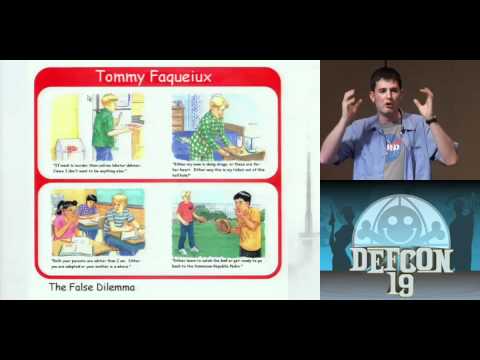
DEFCON 19: The Art of Trolling - A Historical and Technical Deep Dive

The digital ether is a playground, a battleground, and sometimes, a stage for elaborate pranks. The word "trolling" today conjures images of venomous online attacks and disruptive behavior. But strip away the modern stigma, and you'll find a lineage deeply intertwined with the very fabric of hacking and technological innovation. This isn't about fostering malice; it's about dissecting the anatomy of disruption and understanding the psychological leverage that fuels it. Today, we pull back the curtain on DEFCON 19, where speaker Matt 'openfly' Joyce delved into "The Art of Trolling."

In the sprawling landscape of information security and technological development, the concept of trolling has often played a curious, albeit controversial, role. It's a concept that blurs the lines between playful mischief and calculated disruption, often leveraging human psychology and technological vulnerabilities with equal measure. Understanding this phenomenon isn't just about identifying bad actors; it's about recognizing the sophisticated, often ingenious, methods employed to influence, provoke, and achieve specific objectives. Forget the superficial definition; we're going deep.

The Troll's Manifesto: Defining the Digital Disruptor

What exactly constitutes a "troll," especially in the context of technology and security? It's more than just someone leaving inflammatory comments. Historically, and particularly within hacker culture, a troll can be an individual or group who orchestrates actions designed to provoke a reaction, expose flaws, or simply inject chaos into a system for their own amusement or agenda. The nuances are critical:

  • Provocation as a Tool: At its core, trolling is about eliciting a response. This response can range from outrage and confusion to engagement and even unintended validation.
  • Exploiting Psychological Triggers: Trolls are adept at identifying and manipulating human biases, emotional responses, and cognitive shortcuts. They understand what makes people tick, what buttons to push, and what assumptions to exploit.
  • Technological Underpinnings: The digital realm provides fertile ground. From social engineering tactics to exploiting software loopholes or even hardware eccentricities, technology is often the vehicle for trolling.
  • Payloads of Disruption: A troll's action isn't always just about the act itself. It can carry "payloads" – unintended consequences, exposed vulnerabilities, or even the seed of new ideas born from the disruption.

A Cultural Excavation: Trolling Through History

The practice of trolling isn't a purely digital phenomenon. Its roots extend back through human culture, manifesting in various forms of trickery, satire, and social commentary. From ancient jesters to modern-day pranksters, the desire to disrupt norms and provoke thought has always been present. In the realm of technology, this historical inclination found new avenues:

  • Early Internet Culture: Forums, Usenet groups, and early online communities were breeding grounds for experimentation. The relative anonymity and novelty of the internet allowed for new forms of social interaction, including disruptive ones.
  • Hacker Ethos and Subversion: For some, trolling became an extension of the hacker ethos – a way to challenge authority, question established systems, and poke holes in perceived security or order. It was a form of exploration through disruption.
  • Satire and Social Engineering: Successful "trolls" have often used their actions as a form of social commentary or satire, highlighting societal absurdities or technological overreach. This often involved sophisticated social engineering.

Anatomy of a Successful Troll: Case Studies

The DEFCON 19 talk by Matt 'openfly' Joyce likely dissected several projects that, for better or worse, can be classified as successful trolls. These aren't mere disruptions; they are masterclasses in understanding human behavior and technological systems. While the specific examples from the talk are not detailed here, we can infer the characteristics of such projects:

  • Novelty and Surprise: The most effective "trolls" often involve an element of the unexpected, catching people off guard and forcing them to re-evaluate their assumptions.
  • Technical Ingenuity: Whether it’s a clever software exploit, a hardware modification, or a sophisticated social engineering campaign, technical skill is often a key component.
  • Clear Objective (Even if Unconventional): While the objective might not align with mainstream ethics, successful trolls usually have a defined goal, whether it's to prove a point, expose a vulnerability, or simply to generate a massive reaction.
  • Scalability and Reach: The digital age allows for trolls to reach a global audience, amplifying the impact of their actions and further blurring the lines between a personal prank and a widespread phenomenon.

These projects often span the gap between hardware and software, demonstrating that disruption can occur at any layer of the technology stack. The "payloads" might not always be malicious code, but they can certainly carry significant psychological or informational weight.

The Modern Conundrum: Defense in a World of Trolls

In today's interconnected world, understanding the tactics of those who seek to disrupt is paramount for defenders. While the term "trolling" might seem trivial, the underlying techniques – social engineering, psychological manipulation, and the exploitation of technical vulnerabilities – are serious threats. For information security professionals and ethical hackers, studying these disruptive patterns is crucial for developing robust defenses.

The ability to anticipate, detect, and mitigate these actions requires a deep understanding of not only the technical vectors but also the psychological elements at play. It's about building systems that are resilient not just to code exploits, but to attempts to manipulate their users and operators.

Arsenal del Operador/Analista

  • Network Analysis Tools: Wireshark, tcpdump for deep packet inspection.
  • Behavioral Analysis: SIEM systems (Splunk, ELK Stack) to detect anomalous patterns.
  • Social Engineering Analysis: Understanding phishing frameworks and OSINT tools.
  • Psychology & Ethics Resources: Books on cognitive biases and the history of civil disobedience and hacktivism.
  • Defensive Tools: WAFs (Web Application Firewalls), IDS/IPS (Intrusion Detection/Prevention Systems).
  • Learning Platforms: Consider certifications like OSCP for offensive techniques that inform defensive strategies, or specialized courses on social engineering defense.

Taller Práctico: Fortaleciendo tu Postura Defensiva contra la Manipulación Psicológica

  1. Habilitar Autenticación Multifactor (MFA): Reduce la efectividad de credenciales robadas, un vector común en ataques de ingeniería social.
  2. Implementar Políticas de Concienciación sobre Seguridad: Capacita a los usuarios para reconocer intentos de phishing y otras tácticas de manipulación social.
  3. Segmentar la Red: Limita el movimiento lateral de un atacante, incluso si logran comprometer una cuenta o sistema inicial.
  4. Monitorizar Tráfico Inusual: Configura alertas para picos de actividad o patrones de conexión anómalos que puedan indicar un compromiso.
  5. Revisar Permisos de Usuario: Asegura que los usuarios solo tengan los permisos estrictamente necesarios para sus funciones (principio de mínimo privilegio).

Preguntas Frecuentes

¿Es el trolling siempre malicioso?

No necesariamente. Históricamente, ha habido formas de trolling que buscaban la sátira, la crítica social o la demostración de principios, más allá de la mera malicia.

¿Cómo se diferencia el trolling del hacking ético?

El hacking ético busca identificar y reportar vulnerabilidades con permiso para mejorar la seguridad. El trolling, incluso en sus formas más benignas, a menudo opera en una zona gris, sin autorización explícita y con el objetivo primario de provocar una reacción o disrupción.

¿Qué "payloads" pueden llevar los trolls?

Los "payloads" pueden variar enormemente, desde la desinformación y la manipulación psicológica hasta la exposición de vulnerabilidades de seguridad o la simple generación de caos digital.

"The internet is a mirror, reflecting not only our best selves but also our darkest impulses. Understanding the art of trolling means understanding a facet of human nature amplified by technology."

For more information on the DEFCON 19 talk and related content, explore these resources:

El Contrato: Tu Primer Análisis de Tácticas de Disrupción

Ahora te toca a ti. Investiga un incidente de ciberseguridad reciente (un breach, una campaña de desinformación, etc.) que haya tenido un componente significativo de manipulación o disrupción. En los comentarios, desglosa:

  1. El vector de ataque principal o la táctica de disrupción empleada.
  2. El posible objetivo detrás de la acción (¿provocación, ganancia financiera, política?).
  3. Las medidas defensivas que podrían haber mitigado o prevenido el incidente.

Demuestra tu capacidad para analizar el lado oscuro de la red y cómo transformar esa comprensión en defensas más sólidas.